Where Your First 10 Customers Come From

Every founder remembers customer number one, and almost none remember the amount. The reaction is out of all proportion to the revenue, because the first paying customer is not income. It is proof that the problem was real and that someone will pay a stranger to solve it. Before that moment an idea is a belief. After it, a business. This playbook is about where those first ten paying customers actually come from. It starts one step earlier than most advice, with customer discovery rather than promotion, and long before getting found in search and AI answers becomes the thing that matters.
“i literally cried and jumping around in excitement”
Key Takeaways
Where the first 10 actually come from
The short answer, backed by the data and by hundreds of founder accounts, is that the first ten customers are found, not marketed to. They come from people the founder talks to directly, or from a single human message posted where the buyer already spends time. Paid channels, launch splashes, and automated outbound arrive later, once there is a product worth scaling.
The numbers make the case bluntly. In HubSpot's 2024 State of Entrepreneurship survey, 61 percent of entrepreneurs named word of mouth and referrals as their most important source of customers, ahead of every paid channel. The cost gap is not close either.
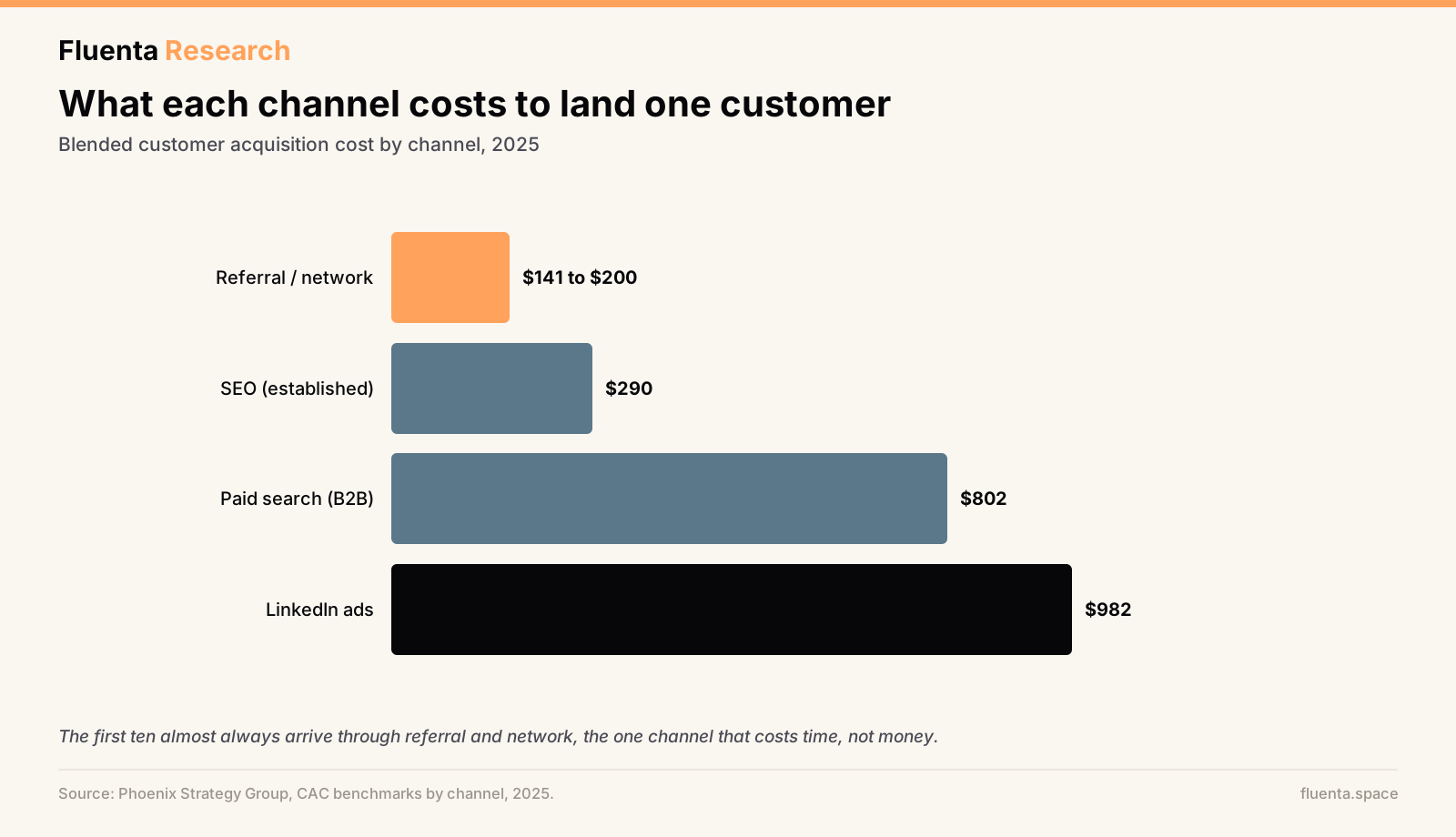
A referred customer costs between 141 and 200 dollars to acquire on average, according to Phoenix Strategy Group's 2025 channel benchmarks. A customer from LinkedIn ads costs 982 dollars. For a founder with no budget and no product, the free channel is not a preference. It is the only one that works at customer number one. Acquisition costs also rose 40 to 60 percent across every paid channel between 2023 and 2025, which makes the free channels relatively more valuable, not less. The figures that anchor this playbook sit in one place below.
| The first-customer numbers | Figure | Source |
|---|---|---|
| Founders whose top customer source is word of mouth and referrals | 61% | HubSpot, 2024 |
| Cost to acquire one referred customer | $141 to $200 | Phoenix Strategy Group, 2025 |
| Cost to acquire one customer through LinkedIn ads | $982 | Phoenix Strategy Group, 2025 |
| Cold email reply rate across 7.5 million sends | 0.45% | Belkins, 2026 |
| Cold emails sent per booked meeting | About 6,250 | Belkins, 2026 |
| Startup failures attributed to no real market need | 43% | CB Insights, 2026 |
The advice everyone gives you, and why it leaves you stuck
Search "how to get your first customers" and every result says two things. Do things that do not scale, and start with your network. Both are true. Neither is a map.
The first half comes straight from Paul Graham, and it is worth reading in his exact words.
“The most common unscalable thing founders have to do at the start is to recruit users manually. Nearly all startups have to. You can't wait for users to come to you. You have to go out and get them.”
That is correct, and it is philosophy. It never says where to find the people to recruit. "Start with your network" is the most common single tip in the genre, and the data confirms it is the most common origin. The problem is that it is delivered as an order rather than a method, and it quietly excludes the largest group of first-time founders: the ones who do not have a relevant network yet.
That gap is where this playbook lives. The useful question is not how. It is where.
The reframe: your first 10 are hiding in your validation research
Here is the move almost no one names. The same idea validation that tells a founder whether an idea is worth building also tells them exactly where the first ten customers are. The communities where the pain gets discussed, the threads full of complaints, the people interviewed to check that the problem was real. Those are not separate from the customer list. They are the customer list.
Founders who have done it say so plainly. One, asked where to even begin, gave the whole playbook in a single line.
“Where did you find the first 10 people you talked to when making sure you were building a product people want in the first place? Call them back.”
The people worth interviewing to validate an idea are, by definition, people with the problem. A validation conversation that goes well is a sales conversation that started early. This is why a structured pass through the ideal customer profile is worth more than it looks: it doubles as a prospect list.
The map: go where your buyer already complains
The channels that produce first customers are not interchangeable. The right one depends on where the specific buyer already spends attention. A useful rule is to find where they already complain about the problem, and to show up there as a person, not a campaign.
Developer and technical tools. The buyer lives on Hacker News, GitHub, and niche subreddits. First customers come from launching honestly and from answering questions in threads about the problem, where one genuinely useful comment beats any ad.
“First 10 came from Reddit ... Reddit is brutal with self-promotion but if the content is genuinely interesting, it works.”
Prosumer and consumer products. The buyer is on X, Reddit, and in niche groups, often complaining about the incumbent. A reliable tactic is to search for a competitor by name, read the one and two star reviews and the complaint threads, then show up there as a person who solves that exact problem.
Local and business services. The buyer is reachable in person or by phone, and the unglamorous channel wins.
“I literally walked into CEOs' offices, asked politely for meetings, and pitched face to face. Conversion was around 1 percent, but that gave us our first collision with reality, and our first paying customers.”
The pattern under all three is identical. The first ten come from one person reaching another person in a place the buyer already is.
Every other channel, and where it belongs
Most channels that fill a mature funnel are close to useless at customer number one. They are worth knowing so time is not wasted on them too early.
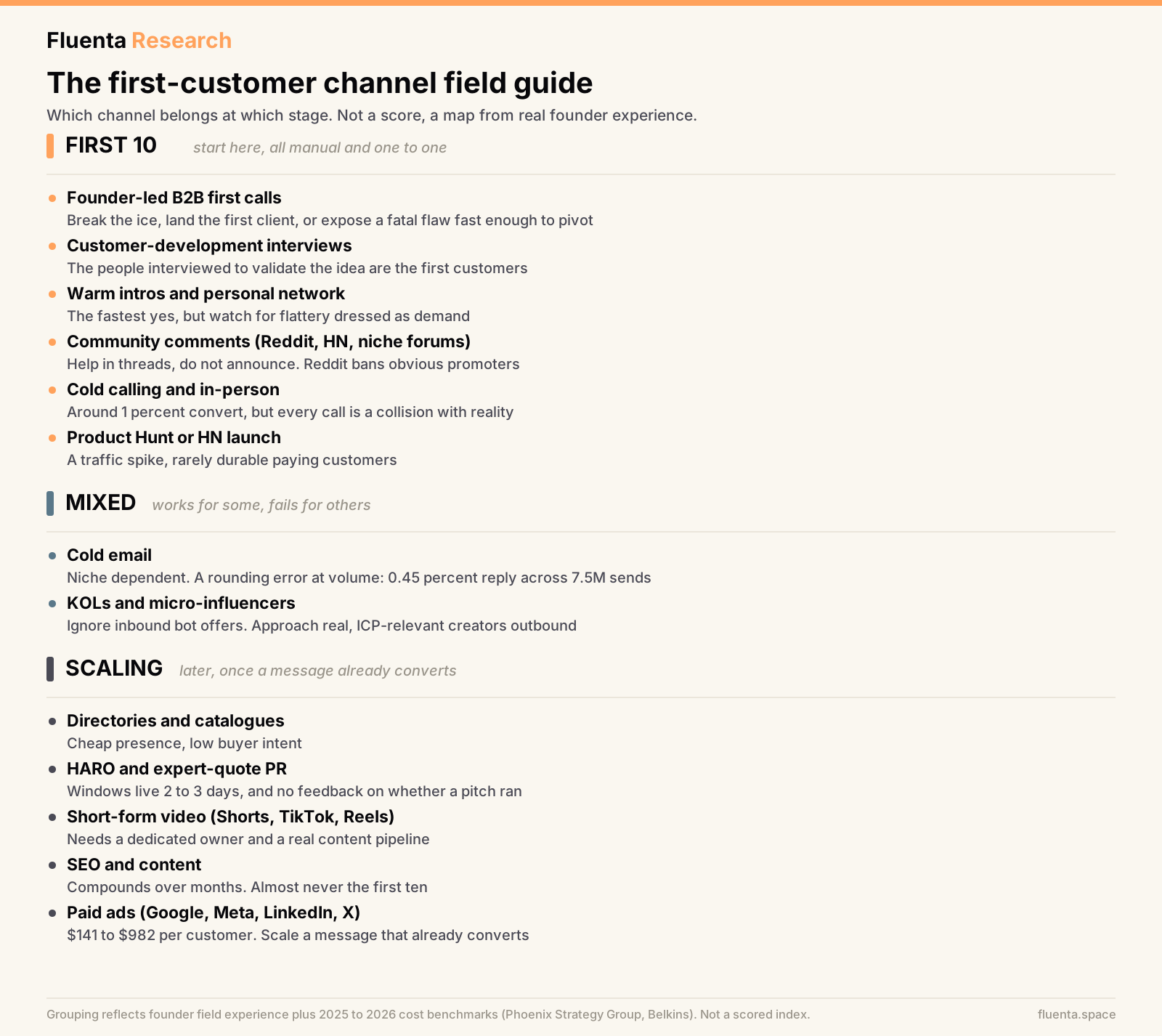
Paid ads on Google, Meta, LinkedIn, and X are a scaling tool, not a discovery tool. They work once there is a message that already converts, and at 150 to 982 dollars per customer they are an expensive way to learn what that message is. SEO and content compound over months and almost never produce the first ten. Directories and catalogues offer cheap presence but low buyer intent.
Influencer and KOL outreach carries a specific warning. Inbound offers are mostly bot accounts with fake follower counts, and responding to them burns budget. The version that works is outbound: find the few creators who genuinely reach the target buyer, and approach them first for a paid or referral collaboration.
Press can work when it is worked directly rather than through a service. One founder built a shortlist of journalists who cover the category and pitched each by hand.
“I started actively reaching out to mainstream online press outlets that looked like they would be willing to cover a newly released macOS app ... This effort got WriteMapper featured on Forbes and Cult of Mac.”
Expert-quote services such as HARO are a good idea that rarely pays off for a first-time founder. The windows live two to three days, spotting the right ones eats hours, and a pitch disappears with no signal about whether it was ever used. Short-form video on YouTube, TikTok, and Instagram can move a consumer product, but only with a dedicated owner and a real content pipeline behind it. It is not a customer-one tactic.
Cold email sits in the middle. It works for some niches and fails flatly for others, and at volume it is a rounding error. For business software the highest-yield move is more direct. A founder-led first call breaks the ice, lands the first paying clients, and when the idea is wrong it exposes the fatal problem fast enough to kill the dead horse and pivot before more time is lost. The field guide below places every channel at the stage where it earns its keep.
Flattery versus demand: is your first 10 real?
There is a trap built into the network-first advice. Friends and former colleagues say yes to be kind, and a founder can assemble ten polite customers who prove nothing. The signal to watch for is not enthusiasm. It is friction. Real demand argues back.
“They pushed back on the 1.99 dollar value, I built the 9.99 dollar tier based on that feedback, and they bought it a few hours later. That exchange was more valuable than anything else I did.”
A customer who negotiates, complains about the price, or demands a feature gives more signal than a friend who congratulates the launch. And the network is not the only path. Some founders reject it outright.
“My first customer came from Reddit outreach, and also my second, and third. None came from personal network.”
The honest test of the first ten is simple. Did they pay before any friendship was involved, and did any of them push back? Ten customers who only ever flattered the founder is not traction. It is a focus group that happened to carry a credit card. Worth remembering that 43 percent of startups that fail do so because there was no real market, according to CB Insights' 2026 analysis of 385 shutdowns. Flattery is how that failure hides.
The 30-day path from validation to paying
None of this requires a finished product. The fastest route to the first ten runs through conversations, not code.
Week 1. Reopen the validation research. List every person and community that showed the problem. That is the prospect list, and it already exists.
Week 2. Have ten real conversations. Not pitches, questions. Where does the problem hurt, what has been tried, what would a fix be worth. The goal is not applause, it is to learn what people will actually use and pay for.
Week 3. Make an offer before the product is finished. A landing page, a demo, or a paid pilot is enough. Joel Gascoigne did exactly this to launch Buffer.
“I used this technique to launch Buffer and had my first paying customer 4 days after launch. The key thing is to focus on conversations in order to validate what you are building is something people want.”
Week 4. Close, then follow the referrals. The first paying customers know others with the same problem. Ask them.
How long until money actually arrives depends on the model.
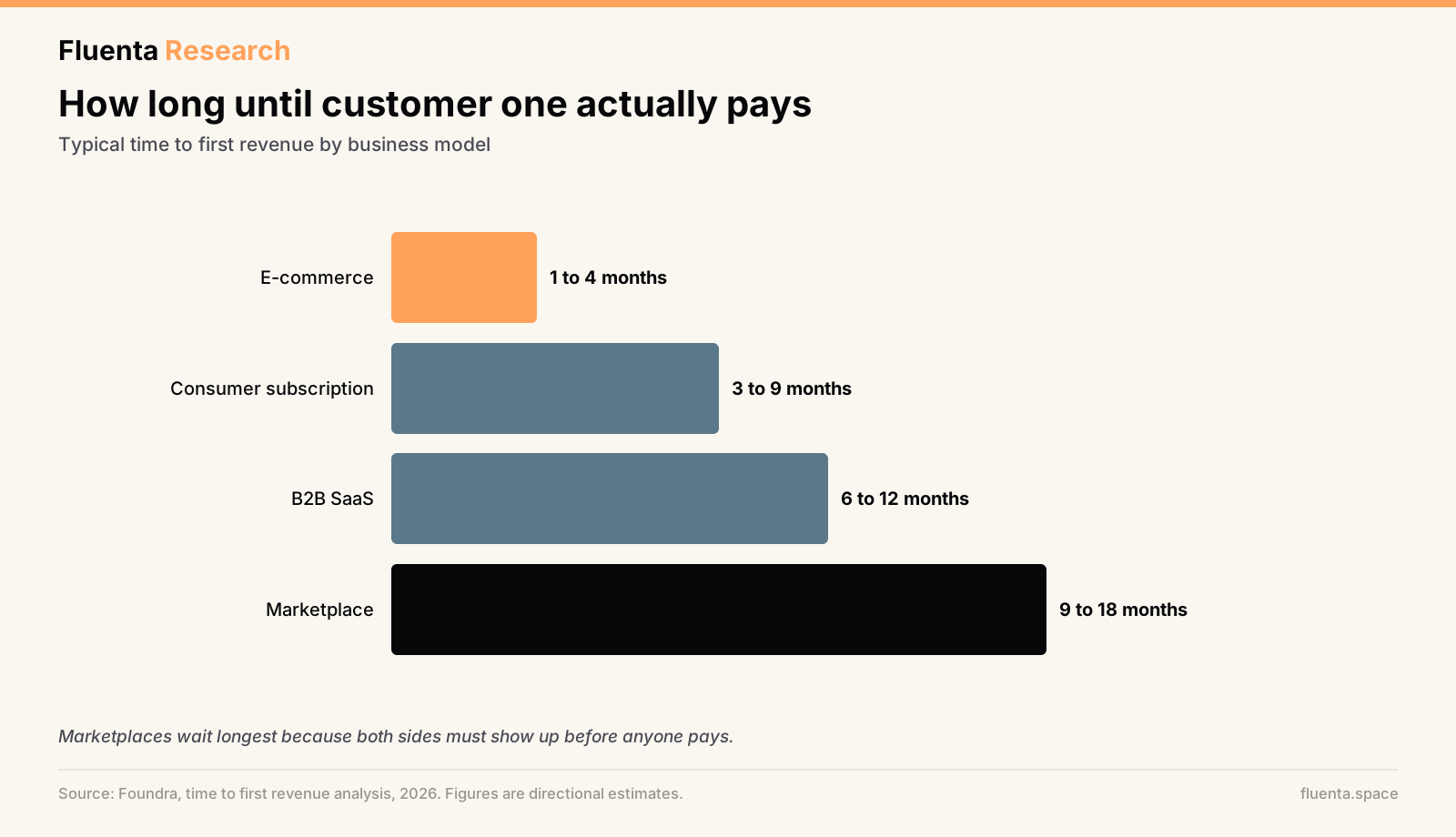
E-commerce founders can see revenue within a few months, while marketplaces can wait more than a year because both sides of the market have to show up before anyone pays, per Foundra's 2026 estimates. A founder who knows the benchmark for their model is far less likely to quit early from a false sense of falling behind.
Why not just buy the first 10 with ads
Because at customer number one, paid outreach at volume is a rounding error. The largest recent dataset on cold email, Belkins' 2026 benchmark of more than seven million sends, is sobering.
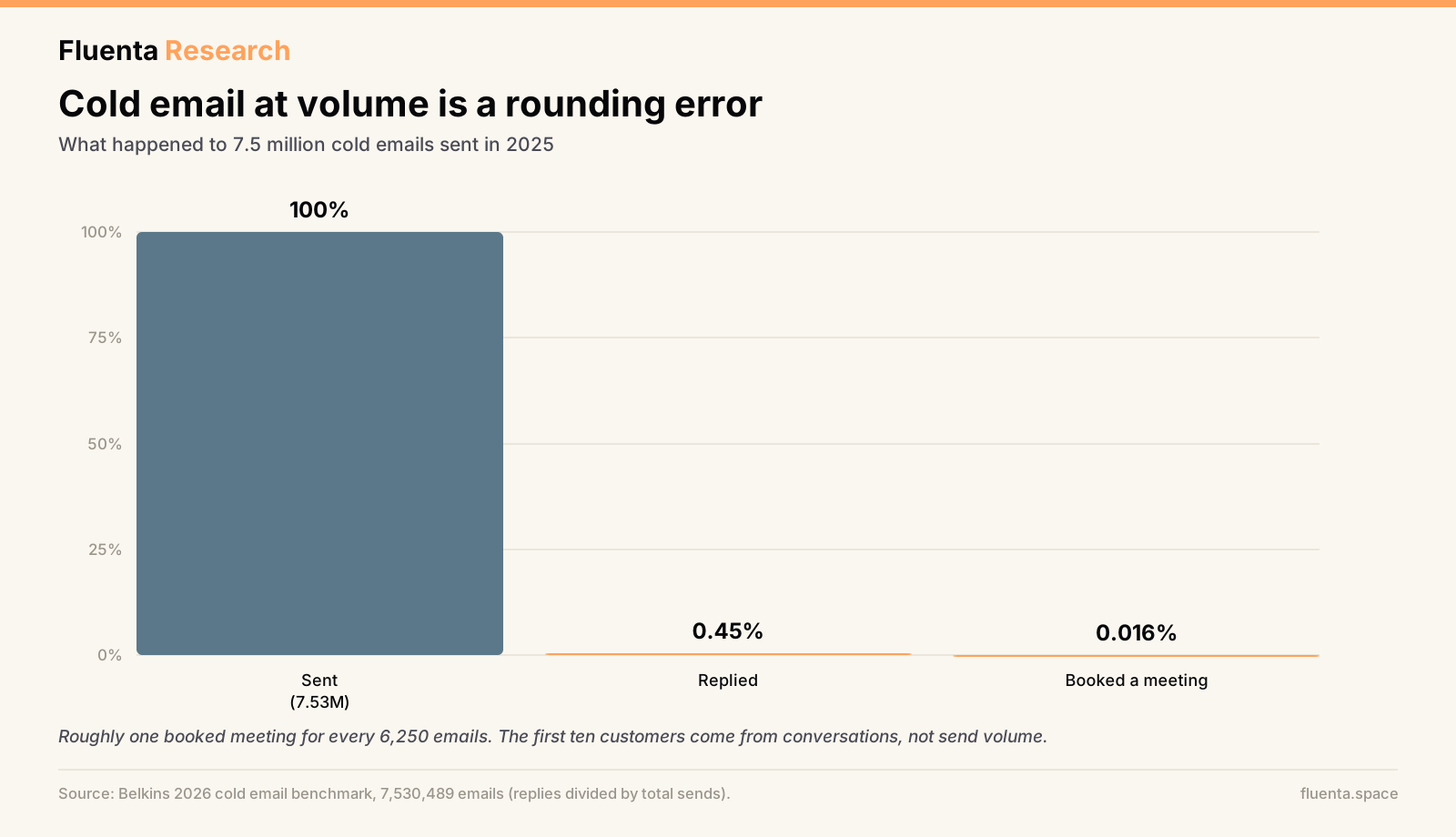
Across 7.5 million emails, the reply rate was 0.45 percent, and only 0.016 percent resulted in a booked meeting. That is roughly one meeting for every 6,250 emails. Ads and cold outbound can work later, tuned against a message that already converts. They are a scaling tool, not a discovery tool. The first ten teach the founder what to say. Only then is it worth paying to say it at scale.
What 10 customers do and do not prove
Ten paying customers prove the problem is real and that at least ten people will pay a stranger to solve it. That is enormous, and it is not product-market fit. Fit is when customers arrive faster than they can be handled and refuse to leave. The first ten are evidence that the search is warm, not the finish line. The job after ten is to learn whether customers eleven through one hundred come from the same channel without the founder carrying each one by hand.
The founders who get there almost never started by buying attention. They started by finding the ten people who already had the problem, in the place they were already talking about it, and reaching them one at a time.
Run your free AI website visibility audit with Fluenta Magnet →
FAQ
Where do a startup's first 10 customers actually come from?+
From direct conversations and single human messages posted where the buyer already spends time, not from paid channels. The most reliable source is the validation research itself: the communities, complaint threads, and people interviewed to confirm the problem was real. Word of mouth and referrals are the most important customer source for 61 percent of entrepreneurs (HubSpot, 2024).
What is the best channel to get your first 10 customers?+
For business software, a founder-led first call is usually the highest-yield channel: it breaks the ice, lands the first paying clients, and exposes a fatal flaw fast if the idea is wrong. For developer tools it is community comments on Hacker News and subreddits; for consumer products it is X, Reddit, and interest groups. Paid ads, SEO, HARO, and influencers are scaling channels that rarely produce the first ten.
How do I get my first customers if I have no network?+
Go where the buyer already complains about the problem. For developer tools that is Hacker News, GitHub, and niche subreddits; for consumer products it is X, Reddit, and interest groups; for local and business services it is in person or by phone. Multiple founders report getting their first customers entirely from community comments and cold outreach, with none from a personal network.
Does cold email work for getting your first customers?+
Rarely at customer number one. Across 7.5 million cold emails in 2025, the reply rate was 0.45 percent and only 0.016 percent led to a booked meeting, about one meeting per 6,250 emails (Belkins, 2026). Cold email works for some niches and fails for others; it is a scaling tool for a message that already converts, not a tool for finding the first ten.
Is it a problem if my first customers are friends and my own network?+
It can be. Friends say yes to be kind, so ten polite customers can prove nothing. The signal to trust is friction, not enthusiasm. A customer who negotiates on price or demands a feature gives real demand signal; a customer who only congratulates you does not.
How many customers do I need before I have traction or product-market fit?+
Ten paying customers prove the problem is real and that people will pay to solve it, but that is not product-market fit. Fit is when customers arrive faster than they can be handled and refuse to leave. The first ten show the search is warm; the next test is whether customers 11 to 100 come from the same channel without manual effort.
Cite this article
Researchers and journalists: this article is freely citable. Click to copy the academic-format reference for your bibliography or footnote.
Ivanov, O. (2026). Where Your First 10 Customers Come From. Fluenta. Retrieved from https://fluenta.space/resources/playbooks/where-first-10-customers-come-from.
About the author

Oleg Ivanov
Co-founder & CEO, Fluenta
Oleg is co-founder and CEO of Fluenta. He spent the last decade shipping products across fintech, commerce, and AI tooling, and now leads Fluenta's work scoring startup ideas against 25 live market and social data feeds.
Related Resources
Founder Playbook
Customer Interview Questions: 12 Discovery Scripts (2026)
Customer interview questions that surface real demand, not polite lies: 12 copy-paste discovery scripts tested across 47 founder interviews.
Validation
Business Idea Validation: 72 Hours, No Friends Needed
Business idea validation done right: a 6-stage, 72-hour framework that kills weak ideas with real demand data before you build. For solo founders.
Validation
ICP Marketing: The Customer Profile Template (2026)
ICP marketing starts with a customer profile template you fill in 30 minutes: a competitor list, 5 churn interviews, and one Reddit thread. Template included.
Find out if AI recommends your business
Fluenta Magnet checks whether ChatGPT, Perplexity and Google AI Overviews name your business or your competitor, then ships the fixes. Free, human-checked, in 24 hours.
Was this helpful?