Best AI Visibility Tools (2026): Ranked by Use Case

An AI visibility tool checks whether AI engines like ChatGPT, Perplexity, and Google's AI Overviews name a business when buyers ask for a recommendation. It reports presence and share of voice across engines. It does not change the answer. That gap, between watching the score and moving it, is the first thing a small business should understand before paying for anything. For the wider picture of search software, see the guide to the best SEO tools for small business.
The market splits cleanly in two. Most products in this category monitor: they tell a brand where it stands and who gets cited instead. A smaller set, plus the people and services behind them, do the fixing: publishing the answers and earning the mentions that make an engine cite a brand in the first place. This guide ranks the tools by the job each one does, lists dated prices, and names the point where a dashboard stops being useful.
Check AI visibility for my website
Free. No subscription, no card. 24 hour turnaround, checked by a human analyst.
Key Takeaways
What is an AI visibility tool, and what does it track?
An AI visibility tool queries large language models and AI search features on a schedule, then records whether a brand is mentioned, cited with a link, or left out, and which competitors are named in its place. Good ones track several engines, sentiment, share of voice, and the specific prompts that trigger a mention. The output is a number and a trend, not a higher ranking.
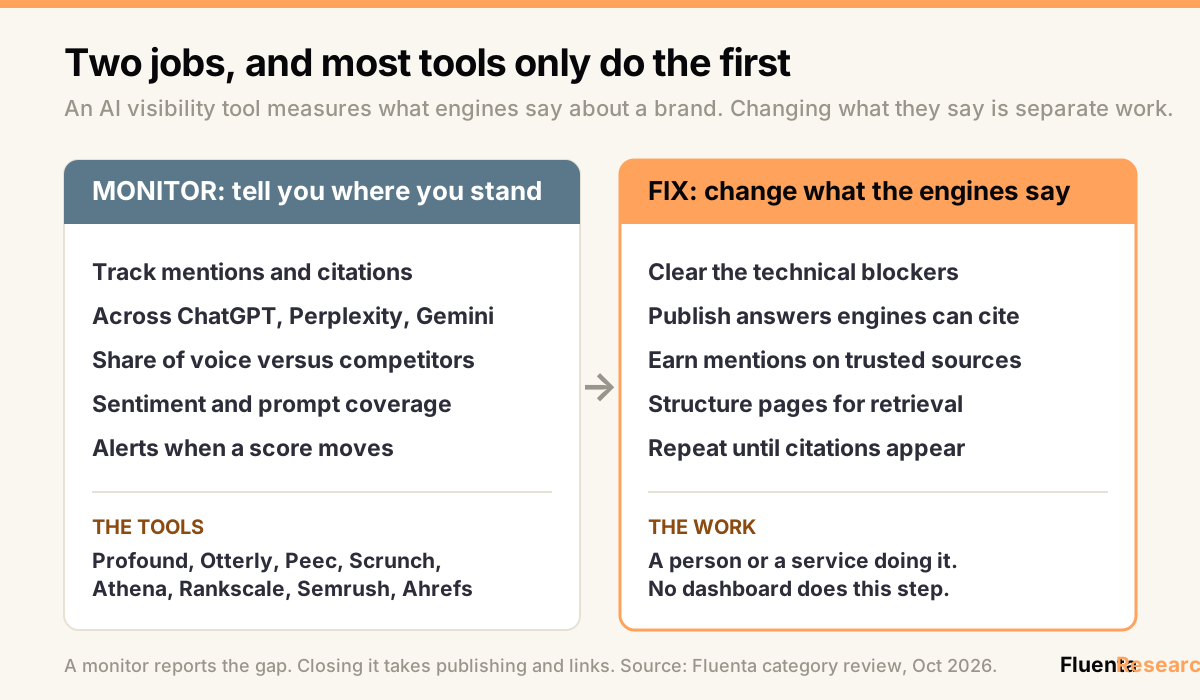
The distinction that matters inside the category is monitor versus fix. A monitor reports the gap between a brand and the brands engines prefer. Closing that gap is separate work: clearing technical blockers, publishing pages an engine can quote, and earning mentions on sources it already trusts. No dashboard performs that step. It hands the reader a to-do list and stops.
Which AI visibility tool should you choose?
Match the tool to the job, not to a feature list. If a brand needs real-time monitoring across many engines at scale, an enterprise platform fits. If it needs the cheapest daily tracker, a budget tool fits. If it needs the gap found and closed, a service fits. And if a brand is not sure it needs one at all, the honest move is to pay nobody yet and run one free check first.
| If you need | The pick | Entry price (Oct 2026) |
|---|---|---|
| Real-time multi-engine monitoring at scale | Profound at enterprise scale; Scrunch or Athena at mid-market | Custom / $300 / $295 |
| The cheapest daily tracker | Rankscale, then Otterly | $20 / $29 |
| Monitoring inside a suite you already pay for | Semrush AI Visibility Toolkit or Ahrefs Brand Radar | Add-on |
| EU-built monitoring with sentiment | Peec AI | about €85 |
| The gap found for free, then fixed | Fluenta Magnet | Free audit; fix from $990 |
| Not sure you need one yet | Pay nobody. Run one free check first. | Free |
That last row matters most for a small business. A paid monitor is worth the money only once a brand has some presence to protect. With little or no presence, the number a monitor reports will read zero for months, and watching a zero costs the same as fixing it.
The best AI visibility tools at a glance
The table below sets nine tools side by side: what each one is, the engines it tracks, whether it monitors or fixes, its entry price, what critics say, who it suits, and who it does not. Prices are the lowest self-serve tier, vendor-reported and verified on 1 October 2026. Several vendors publish no price at all, which the table notes plainly.
| Tool | What it is | Engines tracked | Monitor or fix | Entry price (Oct 2026) | What critics say | Best for | Not for |
|---|---|---|---|---|---|---|---|
| Profound | Enterprise AI-answer monitoring and agents | ChatGPT, Gemini, AI Overviews; up to 9 | Monitor | Free 7-day trial, then custom | No public pricing; built for big teams | Enterprises tracking many engines | Solo founders on a fixed budget |
| Otterly.AI | Daily AI-search rank tracker | ChatGPT, AI Overviews, Perplexity | Monitor | $29/mo (Lite) | Reporting-first, light on fixes | Cheap daily tracking, agencies | Teams wanting done-for-you fixes |
| Peec AI | Monitoring plus sentiment, EU-built | Major chat engines, AI Overviews | Monitor | about €85/mo (Starter) | Price not shown on its own site | EU teams wanting sentiment plus rivals | Buyers who want a public price first |
| Scrunch AI | Enterprise GEO platform | Multiple AI engines, crawler view | Monitor, with guidance | $300/mo (Starter) | Entry price high for small teams | Mid-market and enterprise GEO programs | Micro-budgets and single sites |
| Athena HQ | AEO and GEO tracker with recommendations | ChatGPT, Perplexity, Gemini, AI Overviews | Monitor, with recommendations | Free Essential, then $295/mo | Jump from free to $295 is steep | A free start, then recommendations | Hands-on implementation |
| Rankscale | Credit-based AI-visibility tracker | Major AI engines | Monitor | $20/mo (Essentials) | Credit limits bite as you scale | Cheapest entry, light use | Heavy daily tracking on the base tier |
| Semrush AI Visibility Toolkit | AI-visibility add-on inside Semrush | AI Overviews, major chat engines | Monitor | Add-on, priced within Semrush | Needs a Semrush plan underneath | Existing Semrush users | People who do not want the suite |
| Ahrefs Brand Radar | AI-mention tracking add-on, large prompt set | AI Overviews, major chat engines | Monitor | Add-on within Ahrefs | Sits inside an Ahrefs plan | Ahrefs users wanting scale (259M+ prompts, vendor-reported) | Standalone buyers |
| Fluenta Magnet | Free human-checked audit, then done-for-you fixing | AI engines and search, human review | Fix | Free audit; fix from $990/mo | Not a real-time dashboard; 24h human turnaround | Small businesses wanting the gap closed | Teams that only want a live monitor |
How do the main AI visibility tools compare, one by one?
Each tool below gets the same treatment: the job it is best for, where it is strong, where it stops, its dated price, and the worry a buyer tends to voice before paying. No single tool wins every row, because the right pick depends on budget, scale, and whether a brand wants monitoring or fixing.
Profound
Best for enterprises that need deep, multi-engine monitoring and agent-level analysis. Profound tracks ChatGPT, Gemini, and Google AI Overviews and markets up to nine answer engines on its top tier. Its limitation for a small business is access: the pricing page shows a free 7-day trial, then Enterprise pricing on request, with no public self-serve number as of 1 October 2026. Buyer's worry: "What will it actually cost?" Honest answer: there is no listed price, so expect a sales call and an enterprise quote.
Otterly.AI
Best for cheap daily tracking and agencies watching many brands. Otterly reports rankings and mentions across ChatGPT, Google AI Overviews, and Perplexity. Entry is $29 per month on the Lite tier ($25 annual), vendor-reported 1 October 2026, with Standard at $189 and Premium at $489. Its limit is scope: it reports, it does not fix. Buyer's worry: "Does the cheap tier actually do anything?" Honest answer: yes for tracking, no for producing the content that changes the result.
Peec AI
Best for European teams that want monitoring plus sentiment and a clean competitor view. Peec covers the major chat engines and AI Overviews. Entry is around €85 per month on the Starter tier (about €70 annual), a figure from vendor roundups because Peec's own pricing page lists tiers without numbers as of 1 October 2026. Buyer's worry: "Why is the price hidden?" Honest answer: the public page hides it, so confirm the figure in writing on the first call.
Scrunch AI
Best for mid-market and enterprise teams running a structured GEO program. Scrunch tracks multiple AI engines and how crawlers see a site. Entry is $300 per month on the Starter tier ($250 annual), with Growth at $500, vendor-reported 1 October 2026. Its limit is the floor: the entry price is high for a solo founder. Buyer's worry: "Is this overkill for one small site?" Honest answer: usually yes, unless a brand already competes in a crowded category.
Athena HQ
Best for teams that want a free start, then recommendations on what to change. Athena covers the major engines and layers on AEO and GEO guidance. It keeps a free Essential tier, then jumps to $295 per month on Starter, vendor-reported 1 October 2026. Buyer's worry: "What do I get before paying $295?" Honest answer: the free tier is enough to see whether a brand appears at all, which is the question most small businesses actually have.
Rankscale
Best for the cheapest possible entry and light, occasional checks. Rankscale is credit-based and tracks the major AI engines across broad tiers: Essentials $20, Pro $99, Pro+ $229, Growth $385, Enterprise $780, vendor-reported 1 October 2026. Its limit is the credit model: heavy daily tracking exhausts the base tier fast. Buyer's worry: "Will $20 be enough?" Honest answer: for a handful of prompts checked occasionally, yes; for daily monitoring of many prompts, no.
Semrush AI Visibility Toolkit
Best for teams already paying for Semrush. The toolkit tracks AI Overviews and the major chat engines inside the suite a brand may already use. It is sold as an add-on, priced within Semrush, as of 1 October 2026. Its limit is the dependency: it needs a Semrush plan underneath it. Buyer's worry: "Is this another separate subscription?" Honest answer: it is a line item on top of a Semrush plan, not a standalone purchase.
Ahrefs Brand Radar
Best for existing Ahrefs users who want scale behind the numbers. Brand Radar tracks brand mentions across AI answers and runs on what Ahrefs reports as the largest prompt dataset in the category, a vendor-reported 259 million-plus prompts. It is an add-on within an Ahrefs plan as of 1 October 2026. Buyer's worry: "Do I need the full Ahrefs plan for this?" Honest answer: yes, it sits inside Ahrefs rather than standing alone.
Fluenta Magnet
Best for a small business that wants the gap found and then closed, not just measured. Fluenta Magnet runs a free AI-visibility audit, checked by a human analyst within 24 hours, that surfaces technical blockers, competitor standing, and content gaps. Fixing runs through a content flywheel from $990 per month. Its honest limit sits in the next section: it is not a real-time, multi-engine monitoring dashboard. Buyer's worry: "What happens after the free audit?" Honest answer: a brand gets a plan it can run itself, hand to a freelancer, or have Fluenta execute. Start with the free check at /magnet.
What does a typical small-business site look like to these tools?
There is no standard AI-visibility score. Every vendor invents its own 0-to-100 number, and no two agree on how to calculate it, so a high score on one dashboard means little on another. The only real measure is citation presence: does a given engine name a brand, or a competitor, for the exact prompts its customers type. Count presence per prompt, not points.
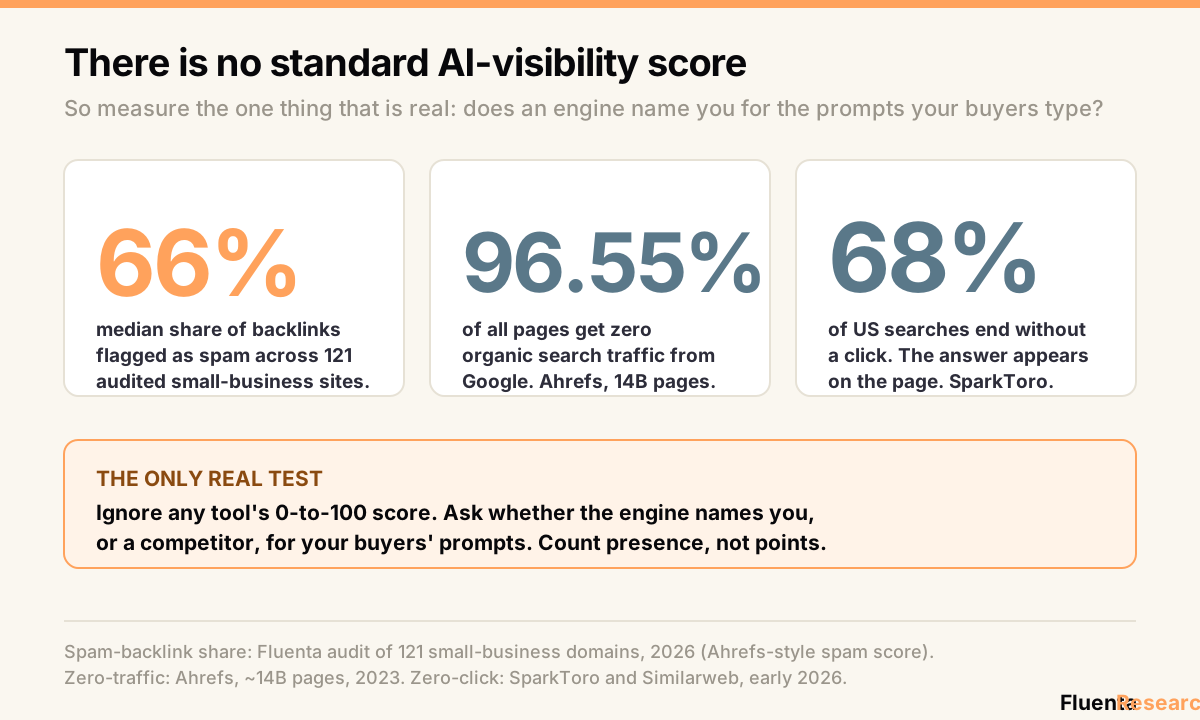
What a monitor would reveal about a typical small-business site is mostly a story of invisibility and fixable damage. Across 121 small-business domains Fluenta audited in 2026, the median site carried 66 percent of its backlinks flagged as spam on an Ahrefs-style spam score, a blocker a monitor can show but never remove. The wider web says the same: Ahrefs found 96.55 percent of pages get zero organic traffic from Google across a study of roughly 14 billion pages, and SparkToro and Similarweb clickstream data put 68 percent of US searches ending without a click in 2026. The answer now appears on the results page, so being named in it is the whole game.
“We're a small product-based ecommerce business, just the founder and me for now, so no SEO expert on board atm”
For a site in that state, a paid monitor reports a flat zero while the fixable problems sit untouched. The number does not move until the content and the links do.
How much do AI visibility tools cost in 2026?
Entry prices run from $20 a month to custom enterprise quotes, and several vendors publish no number at all. The cheapest real entry points are Rankscale at $20 and Otterly at $29. Mid-tier standalone monitoring lands around $295 to $300 at Athena and Scrunch. Profound and Peec hide their numbers behind a trial or a sales call.
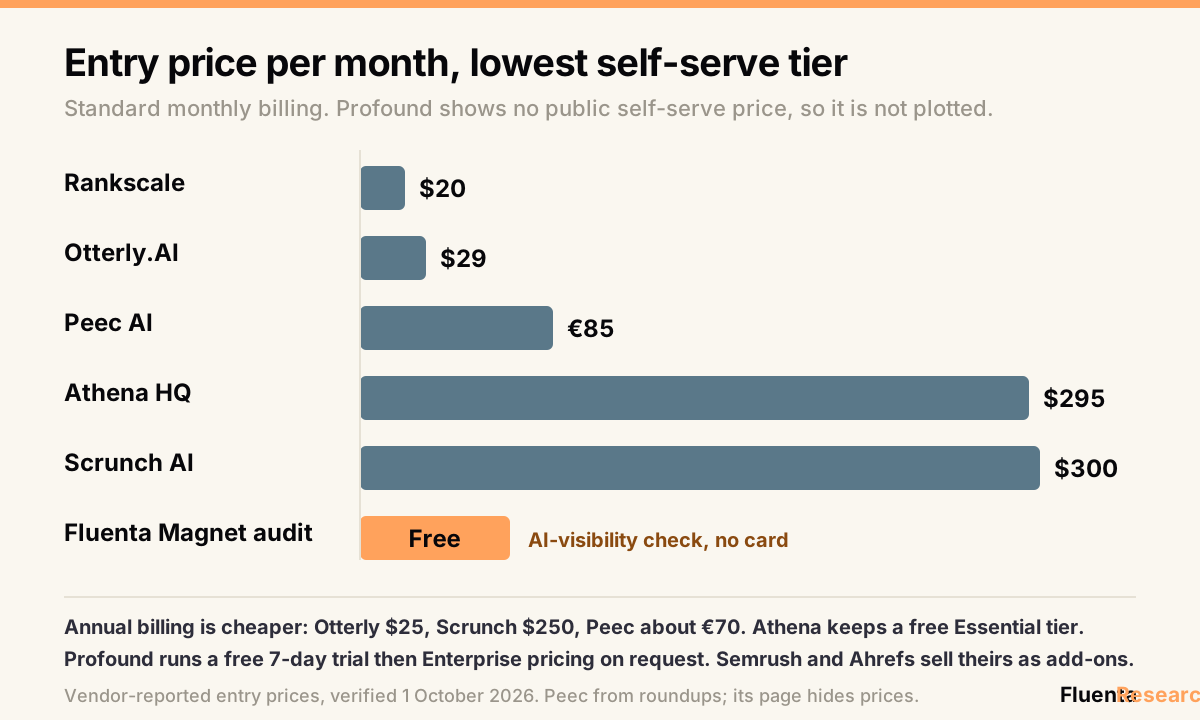
Two patterns are worth pricing in. Annual billing cuts most of these by 15 to 20 percent. And the suites, Semrush and Ahrefs, sell AI visibility as an add-on rather than a standalone plan, so an existing subscriber often pays far less than a new vendor would charge. Every price here is vendor-reported and verified on 1 October 2026; confirm it in writing before buying, because tiers in this category move often.
How do you verify any tool before you pay?
Trust the trial, not the sales deck. Run the free tier or trial against the real prompts a brand's buyers type, check that the engines it tracks are the ones those buyers actually use, read recent reviews rather than the lifetime average, and get the price in writing on the first call. A tool that cannot show its own number before a demo has told a buyer something already.
“I've had a few experiences in the past with so-called SEO experts who promised the world, but ended up either giving super obvious advice, making things worse, or just slowly draining the budget with very little real value”
Four checks separate a real tool from a dashboard that only looks busy. First, engine coverage: confirm it tracks ChatGPT, Perplexity, and Gemini if those are where buyers ask. Second, prompt relevance: the prompts it monitors must match real buyer questions, not vanity brand searches. Third, export and proof: a brand should be able to see the raw mentions behind any score. Fourth, price transparency: a published, dated price beats a custom quote a buyer cannot compare.
Do you even need an AI visibility tool?
Often, not yet. A monitor is worth paying for once a brand has presence to defend and competitors to watch. With little AI presence, a single free check answers the only live question, which is whether engines name the brand at all. If the answer is no, the budget belongs in fixing content and clearing blockers, not in watching a flat line.
The rule of thumb is simple. Established brand with real search traffic and rivals being cited: a paid monitor earns its keep. New or near-invisible site: run one free check, read the gap, and spend on the work that closes it. Paying $29 to $300 a month to confirm a known zero is the most common waste in this category.
Where does Fluenta Magnet fit?
Fluenta Magnet sits on the fix side of the split, and it is honest about what it is not. It is not a real-time, multi-engine monitoring dashboard; a brand that wants a live share-of-voice chart across nine engines should buy Profound, Otterly, or Peec. What Magnet does is find the gap for free and then close it, which is the step the monitors leave to the buyer.
The free audit, checked by a human analyst within 24 hours, surfaces the technical blockers holding a site back, shows where it stands against named competitors, and maps the content gaps worth pursuing. From there a brand can act on the plan itself, hand it to a freelancer, or have the Fluenta Magnet content flywheel produce, publish, and index the work from $990 a month. For the deeper test of whether these tools actually move citations, see the sister analysis on whether AI visibility tools get you cited. To see a brand's own gap, start with the free check at /magnet.
Check AI visibility for my website
Free. No subscription, no card. 24 hour turnaround, checked by a human analyst.
FAQ
What is the best AI visibility tool in 2026?+
There is no single best one; it depends on the job. Profound leads for enterprise multi-engine monitoring, Rankscale ($20/mo) and Otterly ($29/mo) are the cheapest trackers, Peec suits EU teams wanting sentiment, and Fluenta Magnet is the pick for finding the gap free and then fixing it. Match the tool to budget, scale, and monitor versus fix.
Is there a free AI visibility tool?+
Yes. Athena HQ keeps a free Essential tier and Profound offers a free 7-day trial. Fluenta Magnet runs a free AI-visibility audit, checked by a human analyst within 24 hours, that shows whether engines name a brand and what is blocking it, with no subscription or card.
How much do AI visibility tools cost?+
Entry prices run from $20 a month (Rankscale) and $29 (Otterly) up to $295 to $300 at Athena and Scrunch, with Profound on custom enterprise pricing. Semrush and Ahrefs sell AI visibility as an add-on inside their suites. Annual billing usually cuts 15 to 20 percent. All figures vendor-reported, October 2026.
Do I need one if I already do SEO?+
Only once a brand has AI presence worth watching. An AI visibility tool tracks a different surface from rank trackers: whether engines name a brand in their answers. With little presence, a free check answers the live question, and the budget belongs in fixing content, not in monitoring a flat zero.
Which tools track ChatGPT, Perplexity AND Gemini?+
Profound, Peec AI, Athena HQ, and Rankscale track all three, and Otterly covers ChatGPT, Perplexity, and Google AI Overviews. Confirm current engine coverage on each vendor's page before buying, because the list changes often. Check that the engines tracked match where a brand's buyers actually ask.
Are AI visibility tools worth it?+
For an established brand with presence to defend and rivals being cited, a monitor earns its keep. For a new or near-invisible site, paying $29 to $300 a month to confirm a known zero is the most common waste in the category. Run one free check first, then spend on the work that closes the gap.
Cite this article
Researchers and journalists: this article is freely citable. Click to copy the academic-format reference for your bibliography or footnote.
Ivanov, O. (2026). Best AI Visibility Tools (2026): Ranked by Use Case. Fluenta. Retrieved from https://fluenta.space/resources/guides/best-ai-visibility-tools.
About the author

Oleg Ivanov
Co-founder & CEO, Fluenta
Oleg is co-founder and CEO of Fluenta. He spent the last decade shipping products across fintech, commerce, and AI tooling, and now leads Fluenta's work scoring startup ideas against 25 live market and social data feeds.
Related Resources
SEO TOOLS · SMALL BUSINESS
Best SEO Tools for Small Business: What Each Does
The best SEO tools for small business, sorted by the job each one does, what they cost, and the one stage no tool covers: doing the work.
AI VISIBILITY · TOOLS COMPARED
AI Visibility Tools Compared (2026): Do They Get You Cited?
Six AI-visibility tools compared on the one question that matters: do they only track whether ChatGPT names you, or do they actually get you cited?
Guide / Legal marketing
Law Firm SEO: Get Found by Clients and AI
How clients find lawyers now via Google, the local pack, and AI answers, why most firms are invisible to AI, and what to do about it.
Find out if AI recommends your business
Fluenta Magnet checks whether ChatGPT, Perplexity and Google AI Overviews name your business or your competitor, then ships the fixes. Free, human-checked, in 24 hours.
Was this helpful?