How to Increase Website Traffic When Google Sends Less

Something strange is happening to founder-run websites in 2026: the rankings hold steady, and the traffic falls anyway. The page still sits at position three for its main keyword, nothing technical broke, and yet the sessions graph keeps sliding down. That is why most advice on how to increase website traffic now misfires: it optimizes for a click that Google increasingly does not send. If that pattern looks familiar, the first useful move is to see how much of the problem is Google sending fewer clicks versus AI assistants answering the question before anyone reaches the site, and a free AI website visibility audit from Fluenta Magnet shows exactly that in about a minute. The thesis of this guide is blunt: for a founder doing $10k to $500k a month with no marketing team, the goal is not more traffic. It is diversified, qualified traffic that does not collapse when one channel wobbles.
That reframe matters because the old playbook was built for a web that no longer exists. Every top-ranking guide for this topic still reads like a numbered list of 39 tactics bolted around Google as the permanent center of gravity. None of them explain the exact symptom founders are describing right now, and none of them treat the fix as a risk-management problem instead of a growth-hack problem.
Key Takeaways
Why your rankings held but your website traffic fell
The mechanism is the zero-click search. In 2024, 58.5% of US Google searches ended without a click, according to SparkToro and Datos. By the first four months of 2026 that figure had climbed to 68.01%. Similarweb frames the same shift over a decade: roughly 45% of searches ended without a click ten years ago versus 68% today. The rank did not move. The click did.
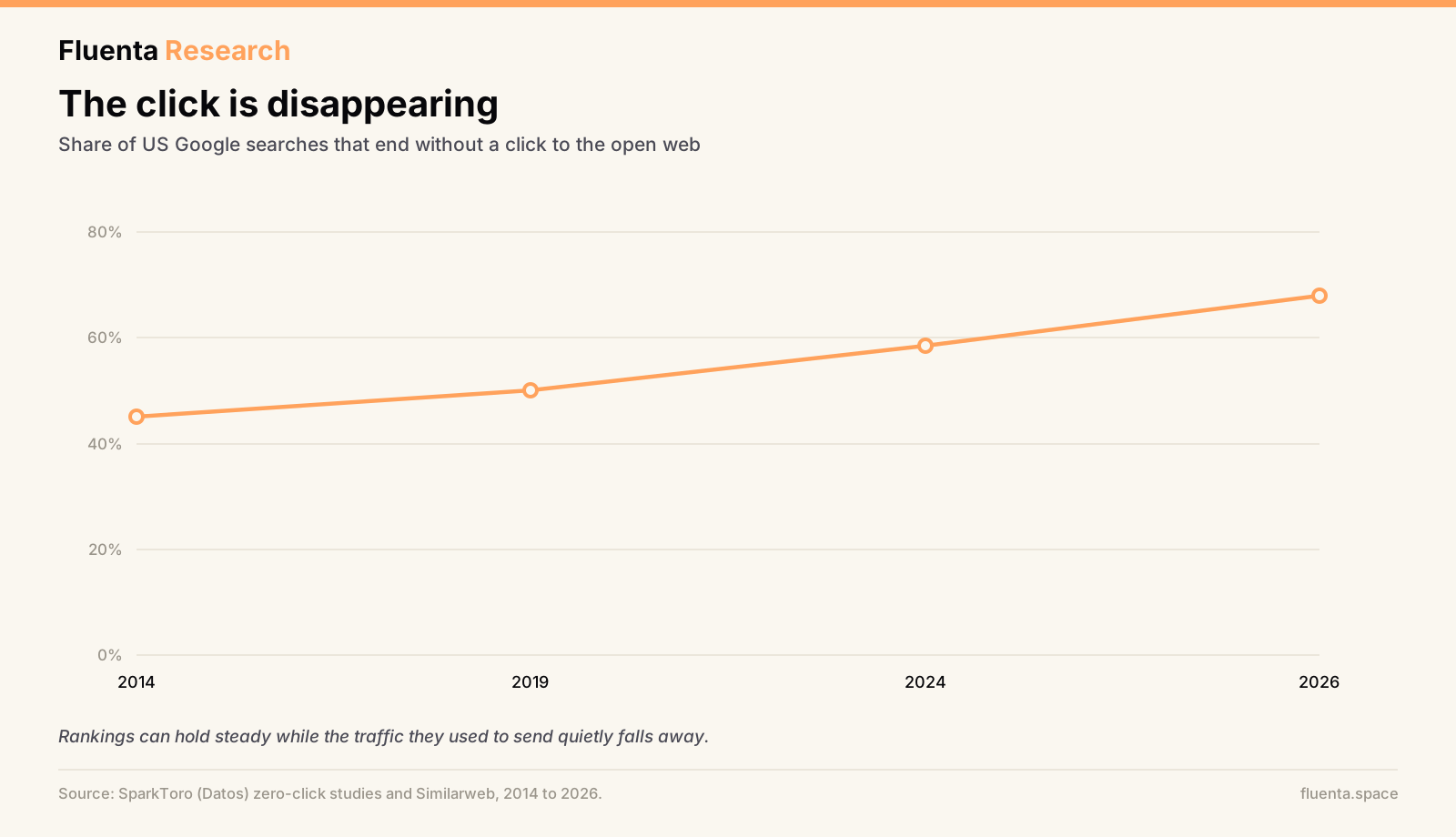
AI Overviews are the accelerant. Ahrefs analyzed 300,000 keywords and found a 34.5% drop in click-through rate for top-ranking pages when an AI Overview sits above them, with position-one CTR on informational queries falling from 5.6% to 2.6% year over year. Seer Interactive measured an even steeper 61% drop in organic CTR when AI Overviews appear. Pew data puts the click rate at 8% on searches that carry an AI summary versus 15% on those that do not. The blue link is still there. It is just buried under an answer the searcher already read.
This is why the diagnosis feels so disorienting from the inside.
Source: Indie Hackers, Google rankings stopped mattering as much for my site
Naming the symptom precisely is the credibility hook: stable rank, falling traffic is not a ranking problem. It is a distribution problem, and distribution problems are solved by owning more than one distribution channel.
Check AI visibility for my website
Free. No subscription, no card. 24 hour turnaround, checked by a human analyst.
The real risk is single-channel dependence on Google
Most founders read a traffic drop as "not enough traffic." The sharper read is that the business was resting on a single channel, and that channel got quieter. When organic search is 50% or more of a B2B SaaS site's traffic, as it typically is, a 25% cut to organic clicks (the drop Gartner forecast for 2026 from AI answers) lands directly on revenue with nothing to absorb it.
Source: Hacker News, thread on recovering lost Google traffic
That is the tell of single-channel dependence: the platform holds the leverage, and the founder holds the risk. The fix is to think like a portfolio manager, not a growth hacker. A portfolio is not built to maximize the return of one holding. It is built so no single holding can sink the whole thing.
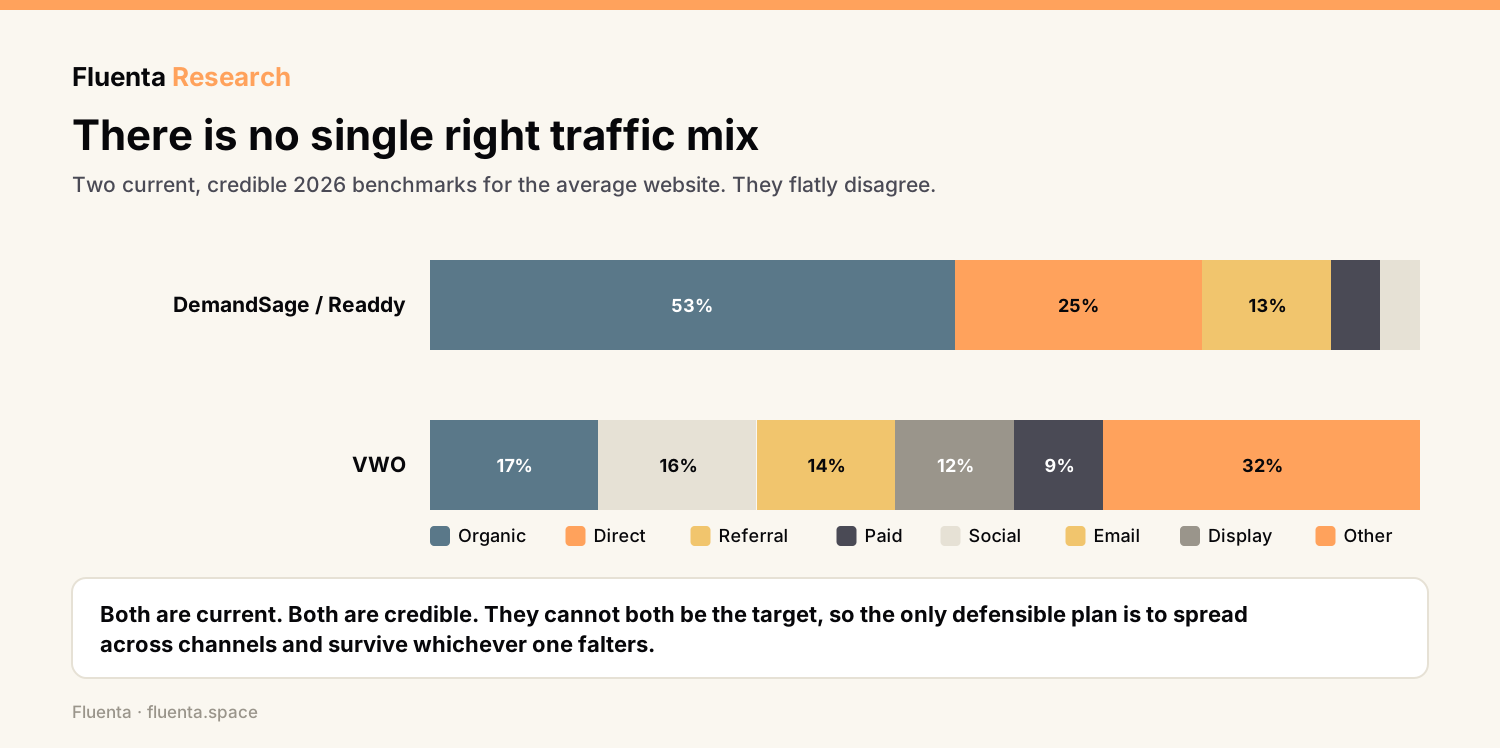
Here is the proof that resilience beats optimization: the benchmarks for a "correct" traffic mix flatly contradict each other. One 2026 synthesis (DemandSage and Readdy) puts the average website mix at organic search 53%, direct 25%, referral 13%, paid search 5%, and social 4%. A different 2026 dataset from VWO reports organic search at just 17%, social 16%, email 14%, display 12%, and paid search 9%. Both are current. Both are credible. They cannot both be the right target, which means there is no right target. When the "ideal" mix depends entirely on methodology, the only defensible strategy is to spread across several channels so the site survives whichever one falters. Diversification is not a hedge against being wrong. It is the plan.
More traffic is the wrong goal, qualified traffic is
Before adding a single visitor, it is worth asking whether the last batch of visitors did anything. For a large share of founders, the honest answer is no.
Source: Indie Hackers, I thought more traffic would fix my SaaS. It didn't
That story repeats across communities: 119 ad clicks and zero paying customers in one case, ten signups a day and no sales in another. The lesson founders keep relearning is that a traffic problem is often a positioning problem wearing a costume. If 1,000 visitors land and nobody moves, sending 10,000 more usually amplifies the same leak.
The conversion data explains why channel choice, not channel volume, decides the outcome. Across 2026 ecommerce benchmarks, conversion rate varies dramatically by source: email around 4.2%, referral around 4.2%, direct near 3.0%, organic search 2.7% to 2.8%, Google paid search around 2.5%, and Meta paid social near 1.1%. Red Stag's 2025 breakdown is even starker, with referral at 5.4% and email at 5.3% out-converting paid social by five to seven times.
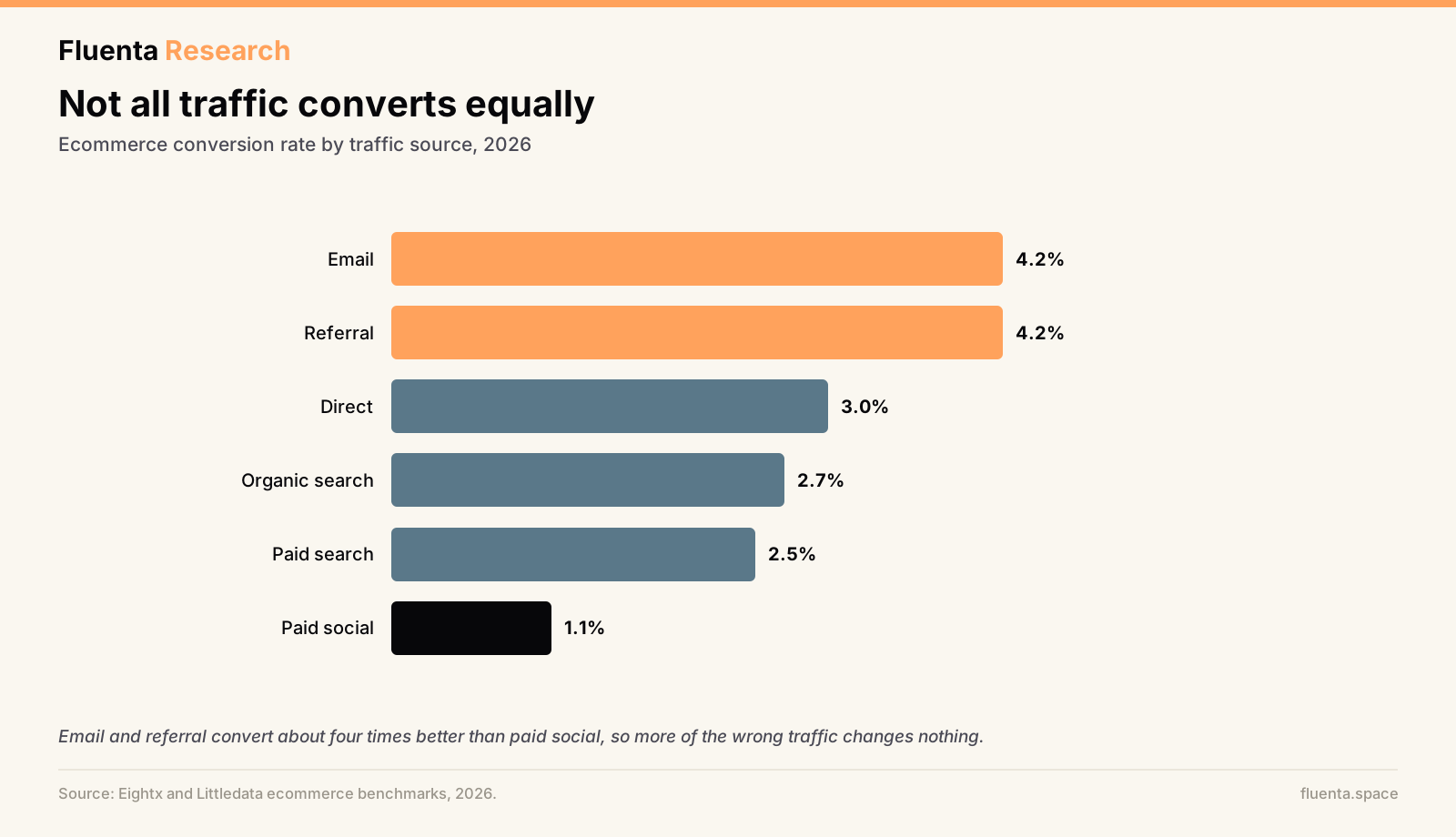
Read that gap carefully. A visitor from a referral or an inbox arrives with intent already formed. A visitor from paid social was interrupted mid-scroll. Ten thousand of the second kind can be worth less than a thousand of the first. The KPI worth tracking is not sessions. It is qualified sessions, and the fastest way to raise it is usually to fix the landing page and the positioning before spending a dollar on more reach.
How to increase website traffic in 2026: the barbell playbook
The barbell is the honest structure for a founder who is tight on cash and short on time. One end is a fast channel that produces traffic this month. The other end is two compounding channels that build a moat over quarters. Nothing sits in the fragile middle where a tactic is neither fast nor durable.
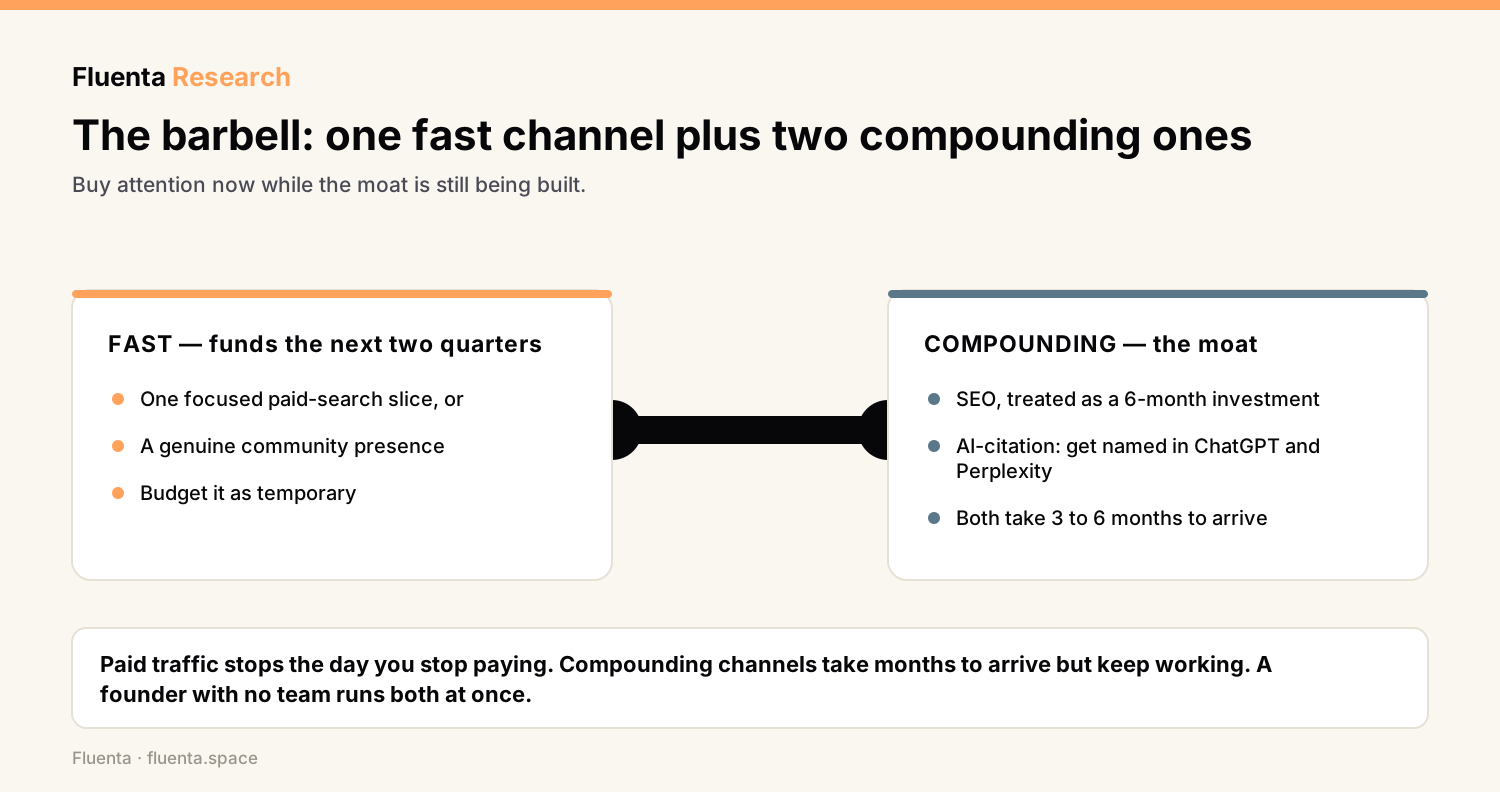
The fast end pays for attention now. Paid search or a focused community presence puts visitors on the page inside days. The tradeoff is that paid traffic stops the day the card stops: commercial terms in this space carry real cost, with "website traffic" around a $2.50 cost per click, "technical seo" near $4.00, and "email list" around $6.00 in Ahrefs data, and B2B SaaS clicks commonly running $1 to $3 each. Paid is a faucet, not a well. It is worth running only long enough to fund the compounding end.
The compounding end is where durability comes from, and it has two rails. The first is SEO, with eyes open about the clock. New sites need roughly three to six months for the first meaningful organic movement and six to twelve months or more for substantial, predictable traffic. Indexing can happen in hours, but indexing is not ranking.
Side by side, the trade each channel actually makes is easier to see, and so is the reason nothing belongs in the fragile middle.
| Channel | First result | Cost model | Compounds? | Best for |
|---|---|---|---|---|
| Paid search | Days | $2.50 to $6.00 per click | No, stops with the card | Funding the compounding end |
| Focused community | Days | Time | Partly, threads stay citable | Early distribution |
| SEO / organic | 3 to 6 months | Time-heavy upfront | Yes | Durable, lowest long-run cost |
| AI citation | Weeks | Content and structure | Yes | The channel nobody optimized yet |
| Email and owned list | Immediate once built | Owned | Yes | Highest conversion per visit |
| Referral | Immediate | Relationship | Partly | Highest-intent visitors |
Source: r/DigitalMarketingHack, how long it realistically takes a new website to get organic traffic
Anyone promising traffic in two weeks from SEO is selling something. The realistic move is to commit to SEO as a six-month investment, not a this-quarter rescue, and to pair it with the fast channel so the business is not starving while the compounding rail matures. For the deeper argument on whether organic search is still worth that wait at all, this companion piece on is SEO dead in 2026 makes the case that search is not dead, it moved.
The second compounding rail is the one almost no competitor names, and it is the subject of the next section: getting cited inside AI assistants. Together the barbell reads as one fast channel funding two slow ones, with the fragile middle deliberately left empty. That is a plan a solo founder can start inside a week.
The channel nobody optimized yet: getting cited in ChatGPT and Perplexity
AI referral traffic is still small enough that most dashboards miss it. Semrush measured it at 0.14% of total traffic in 2025. SE Ranking put it at 0.24% in 2025 rising to 0.32% in 2026, up from 0.02% in 2024, a 16x jump in under two years. Conductor's 2026 read is higher at roughly 1.08% of all traffic, growing about 1% month over month. Adobe reported AI-driven referrals up more than 10x from July 2024 to February 2025, and AI-referred traffic to US retailers up 393% year over year in Q1 2026.
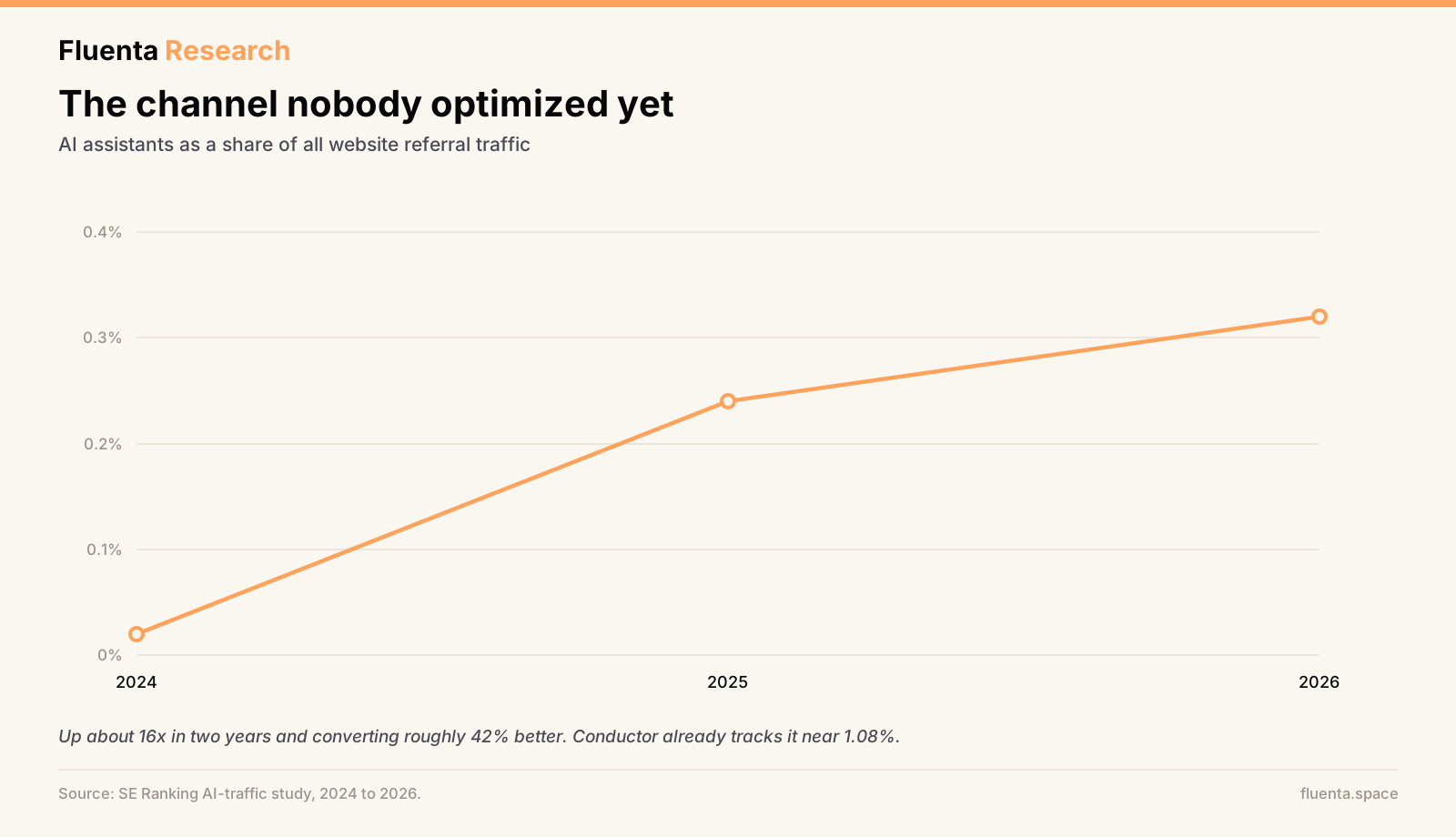
Two facts make this the asymmetric bet. First, the traffic converts. AI-referred visitors convert about 42% better than traditional channels, because they arrive pre-qualified after the assistant already vetted the options. Second, almost nobody is optimizing for it yet, which is exactly the position SEO occupied in 2010. Being the source an assistant quotes is cheap now and will not be cheap once every competitor notices.
The founder proof is concrete.
Source: Indie Hackers, what makes ChatGPT, Perplexity, Copilot, and Claude recommend your site
One article carried nearly all of it, and most of the AI channel flows through ChatGPT, which SE Ranking puts at about 74.78% of AI referrals, with Gemini near 11.56% and Perplexity around 7.23%. The practical read for a team-less founder: a small number of well-structured, genuinely useful pages can capture a channel that is compounding fast and converting high, long before the rest of the market shows up. The starting point is knowing whether assistants can even see the site today, which is what A free AI website visibility audit from Fluenta Magnet is built to answer.
Start here
The barbell only works if it gets built in order. Save the sequence, then work it top to bottom:
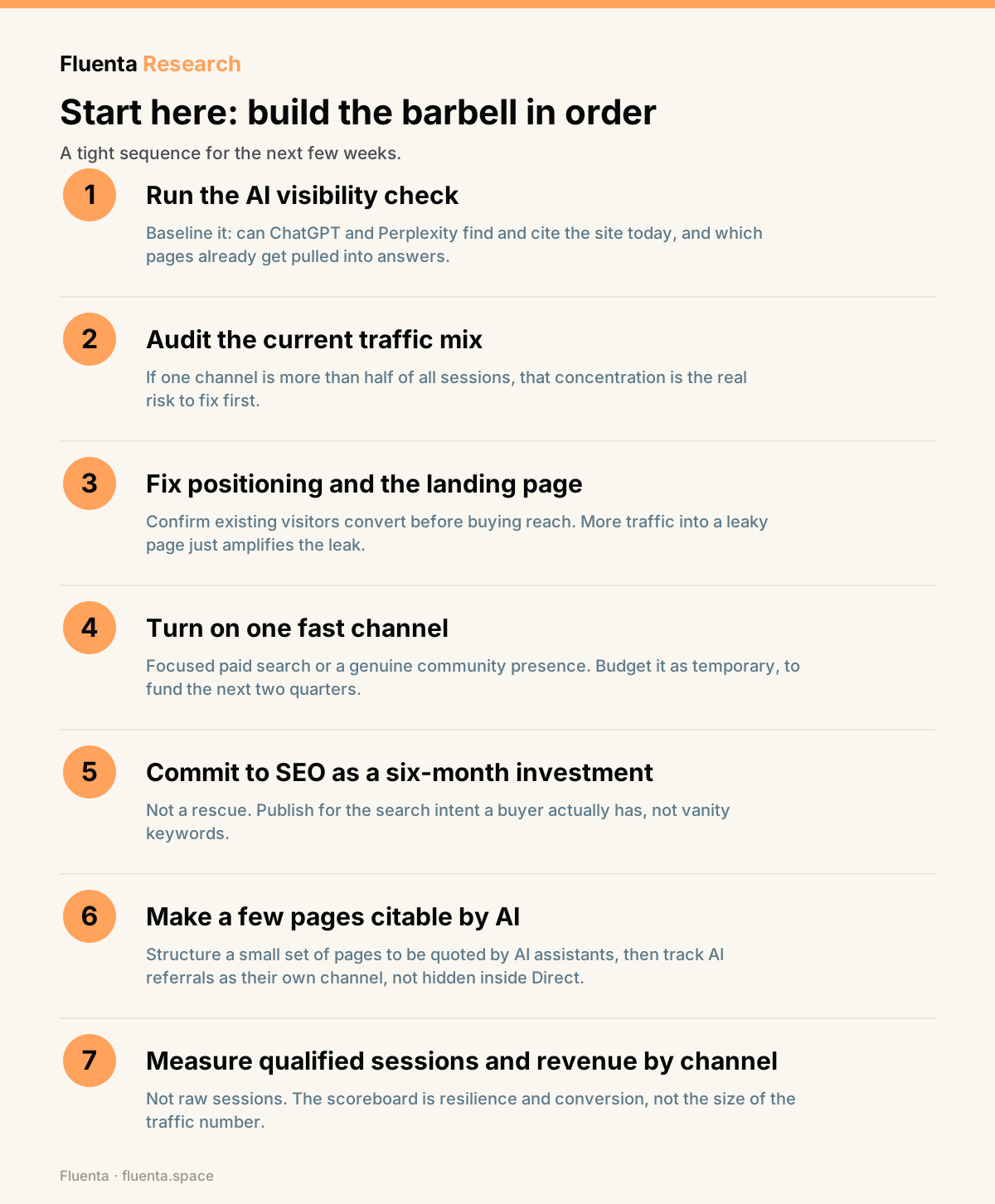
1. Run the AI visibility check. Establish a baseline: can ChatGPT and Perplexity find and cite the site right now, and which pages already get pulled into answers.
2. Audit the current traffic mix. If one channel is more than half of all sessions, that concentration is the real risk to fix first.
3. Fix positioning and the landing page. Confirm existing visitors convert before buying reach, because more traffic into a leaky page just amplifies the leak.
4. Turn on one fast channel. Focused paid search or a genuine community presence to fund the next two quarters, budgeted as temporary.
5. Commit to SEO as a six-month investment, not a this-quarter rescue, and publish for search intent a buyer actually has.
6. Make a few pages citable by AI assistants, then track AI referrals as their own channel rather than letting them hide inside "Direct."
7. Measure qualified sessions and revenue by channel, not raw sessions. The scoreboard is resilience and conversion, not the size of the traffic number.
The founders who navigate this shift are not the ones chasing a bigger traffic number. They are the ones who stopped depending on a single channel, made every channel earn its place on conversion, and got early to the one channel the rest of the market has not optimized yet.
FAQ
How long does it take for a new website to get traffic?+
Most new sites see first meaningful organic movement in 3 to 6 months and predictable traffic in 6 to 12 months. Indexing can happen in hours, but indexing is not ranking. This is why a founder with no marketing team needs one faster channel running alongside the compounding ones.
How do I get visitors to my website without paying for ads?+
Compounding channels: search content aimed at commercial and branded queries, presence where the AI models pull answers (Reddit, third-party lists, structured data), and referral or community distribution. None are instant, so pair them with one fast channel while they mature.
Why is my website not getting traffic?+
Two common causes in 2026: the site is not yet indexed or trusted (new domains take months), or rankings hold but an AI Overview now answers the query above the link, so clicks fall. Check whether impressions are steady while clicks drop; that pattern points to the AI shift, not a ranking loss.
How do I get more traffic to my website in 2026?+
Diversify. Run a barbell: one fast channel now (a community or paid slice) plus two compounding channels (search and AI-citation). Optimize for qualified traffic, not raw sessions, since email and referral convert several times better than paid social.
How do I get found in ChatGPT and Perplexity?+
Be consistently described and cited across the sources these assistants read, answer the exact question clearly, and keep pages machine-readable. AI referral traffic is small but growing 16x in two years and converts about 42% better, so early optimization is an asymmetric bet.
How long does SEO take to work?+
Roughly three to six months for the first meaningful organic movement, and six to twelve months or more for substantial, predictable traffic. Indexing can happen within hours, but indexing is not ranking. Anyone promising traffic in two weeks from SEO is selling something. Treat it as a six-month investment rather than a this-quarter rescue.
What is the best way to drive traffic to your website?+
There is no single best channel, and betting on one is how a site ends up fragile. The durable structure is a barbell: one fast channel that produces traffic this month, such as focused paid search or a genuine community presence, paired with two compounding channels that build over quarters, SEO and AI citation. Nothing sits in the middle where a tactic is neither fast nor durable.
Is SEO or paid advertising better for traffic?+
They do different jobs, so the comparison is usually framed wrong. Paid search delivers visitors within days but stops the day the card stops, with commercial terms in this space running roughly $2.50 to $6.00 per click. SEO takes three to six months to move and then compounds without a per-click cost. For a founder tight on cash, the practical answer is to run paid only long enough to fund the compounding end.
Cite this article
Researchers and journalists: this article is freely citable. Click to copy the academic-format reference for your bibliography or footnote.
Ivanov, O. (2026). How to Increase Website Traffic When Google Sends Less. Fluenta. Retrieved from https://fluenta.space/resources/guides/how-to-increase-website-traffic.
About the author

Oleg Ivanov
Co-founder & CEO, Fluenta
Oleg is co-founder and CEO of Fluenta. He spent the last decade shipping products across fintech, commerce, and AI tooling, and now leads Fluenta's work scoring startup ideas against 25 live market and social data feeds.
Related Resources
SEO in 2026
Is SEO Dead? What Changed in 2026, and What Works
797,444 impressions, 7 clicks. The hard 2026 data on what died in SEO, what still works, and how to get cited by ChatGPT and AI Overviews.
Local SEO Guide 2026
Local SEO for Small Business in 2026: Google and AI
Google AI Overviews now hit 68% of local searches. How small businesses win local SEO on both layers: the map pack and AI.
SEO TOOLS · SMALL BUSINESS
Best SEO Tools for Small Business: What Each Does
The best SEO tools for small business, sorted by the job each one does, what they cost, and the one stage no tool covers: doing the work.
Find out if AI recommends your business
Fluenta Magnet checks whether ChatGPT, Perplexity and Google AI Overviews name your business or your competitor, then ships the fixes. Free, human-checked, in 24 hours.
Was this helpful?