Is SEO Dead? What Changed in 2026, and What Works

One screenshot has done more to convince founders that SEO is dead than any think-piece ever could. A marketer posted their Google Search Console numbers: 797,444 impressions, and 7 clicks. That is a 0.0009% click-through rate on content Google was actively featuring. If your own traffic is sliding and you are quietly blaming AI, that number probably feels less like a statistic and more like a diagnosis. Before you accept the diagnosis, run a free AI website visibility audit from Fluenta Magnet to see whether AI engines are citing you at all, because the honest answer to "is SEO dead" is more useful than the panic: SEO is not dead. The ten blue links are. Those are two very different funerals, and confusing them is costing owners money.
This piece serves both sides of that fight. The doom data is real and it is worse than most people admit. The contrarian data is also real, and it points at a specific, boring, do-it-this-week fix. Both are true at once. Here is the whole picture, with numbers on the table.
Key Takeaways
The doom data, honestly
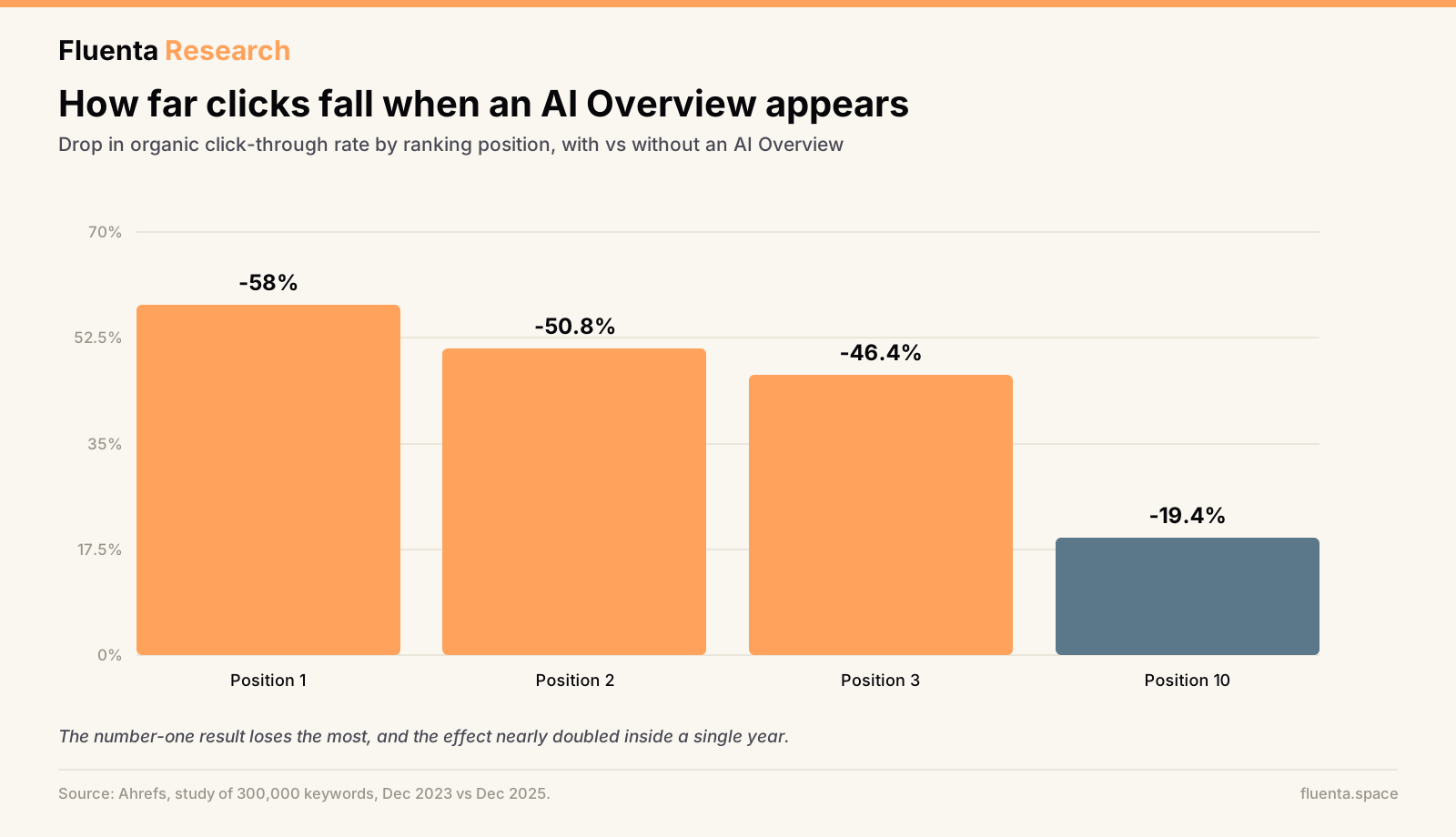
Start with the study that should scare you, because pretending it does not exist is how consultants lose trust. Ahrefs analyzed 300,000 keywords, 150,000 with a Google AI Overview and 150,000 without, comparing Search Console data from December 2023 to December 2025. When an AI Overview appears, the number-one organic result loses 58% of its average click-through rate. Position 2 drops 50.8%, position 3 drops 46.4%, and even position 10 sheds 19.4%. The uncomfortable part: Ahrefs measured only a 34.5% reduction in April 2025, so the damage nearly doubled inside a single year.
Independent research agrees. Pew Research Center tracked 900-plus US adults across 68,879 queries in March 2025. Users who saw an AI summary clicked a traditional link only 8% of the time, versus 15% when there was no AI summary. Only 1% clicked a link inside the summary itself. And 26% of sessions with an AI answer ended right there, the searcher satisfied and gone.
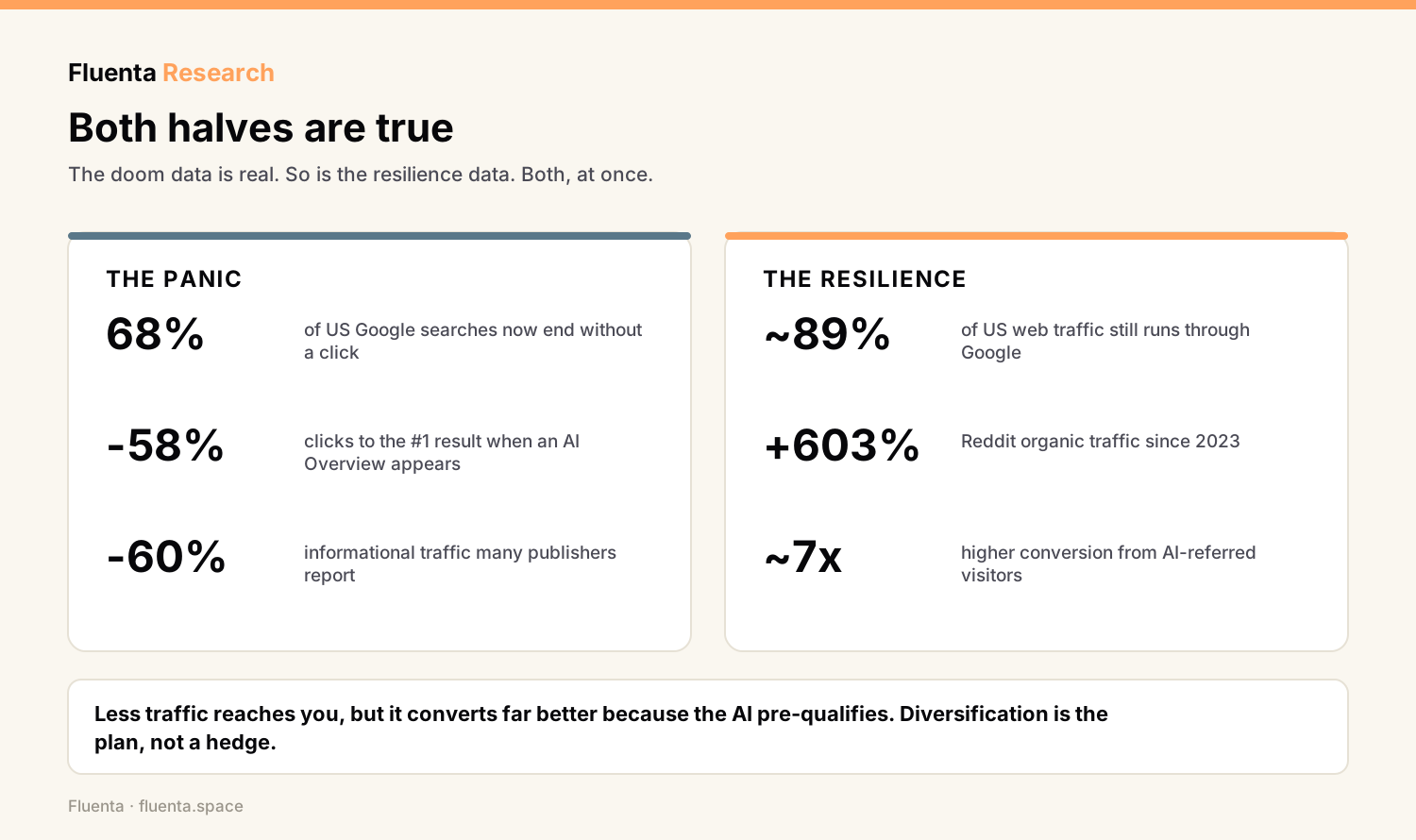
Then there is the ambient bleed that predates AI Overviews entirely. SparkToro's clickstream study found that in 2024, 58.5% of US Google searches already ended without any click. Their 2026 update pushes US zero-click near 68%. For every 1,000 searches, fewer than one third now send a visitor to the open web. If your business assumed that ranking equals traffic, that assumption has been quietly breaking for years, and AI just made the break loud.
The newest surface is even stingier with clicks. Similarweb reports that Google's AI Mode generates referrals on only 1.6 to 2.5% of queries, versus the 17 to 19% referral rate of classic Google. Roughly 24 to 25% of traditional Google sessions end in a click, against about 4.5 to 5% of AI Mode sessions. As Google moves more of its interface toward answers rather than links, the click that fed the open web keeps shrinking. This is the part the contrarians should not wave away: the trend line points down, and it is steepening.
Source: r/SEO, "Google AI Overviews has the worst click-through rate I've ever seen"
Check AI visibility for my website
Free. No subscription, no card. 24 hour turnaround, checked by a human analyst.
Why the panic is half wrong
Now the other half, because the doom crowd stops reading exactly where the story gets interesting.
Google still owns distribution. Neil Patel's 2026 analysis puts Google at roughly 89% of all US web traffic, with AI and LLM search still only about 6% of global search volume even though it is tripling year over year. The channel did not disappear. The behavior inside it shifted.
Where did the clicks that still happen actually go? To user-generated content. Reddit's organic traffic is up 603.41% since June 2023, and Quora is up 379.33%, per Evergreen Media's 2026 trend data. Reddit now appears in 97.5% of Google product-review queries. The open web did not die uniformly. Blog posts died and forum threads feasted.
That AI referral pool is small but exploding. Similarweb tracked ChatGPT referrals up 157.7% week over week after a May 2026 update, with total AI referrals roughly tripling from a late-April baseline. ChatGPT alone sent 396.8 million referral visits to 1,000 tracked sites in a single month. The money agrees the shift is real: Profound, a startup that tracks brand visibility inside AI answers, raised a $20 million Series A at a valuation above $100 million within a year of founding. Investors do not price a dead channel that way.
And the traffic that does arrive from AI is a different animal. Rob Hoffman, CEO of Mentions, reports via Forbes that LLM-referred visitors convert about 7x higher than Google organic visitors. That is the number that reframes everything. AI pre-qualifies. It reads the ten results, digests them, and sends you only the person who is ready to decide. You lose volume and gain intent. "Traffic down 60%" and "revenue flat or up" can live in the same quarter, which is exactly why raw sessions became a lying metric.
Source: r/seogrowth, "Is SEO dead or just changing? What's actually working for you in 2026?"
The three paradoxes nobody explains
Owners are not stupid. They feel gaslit because their dashboards show contradictions no one names for them. There are three.
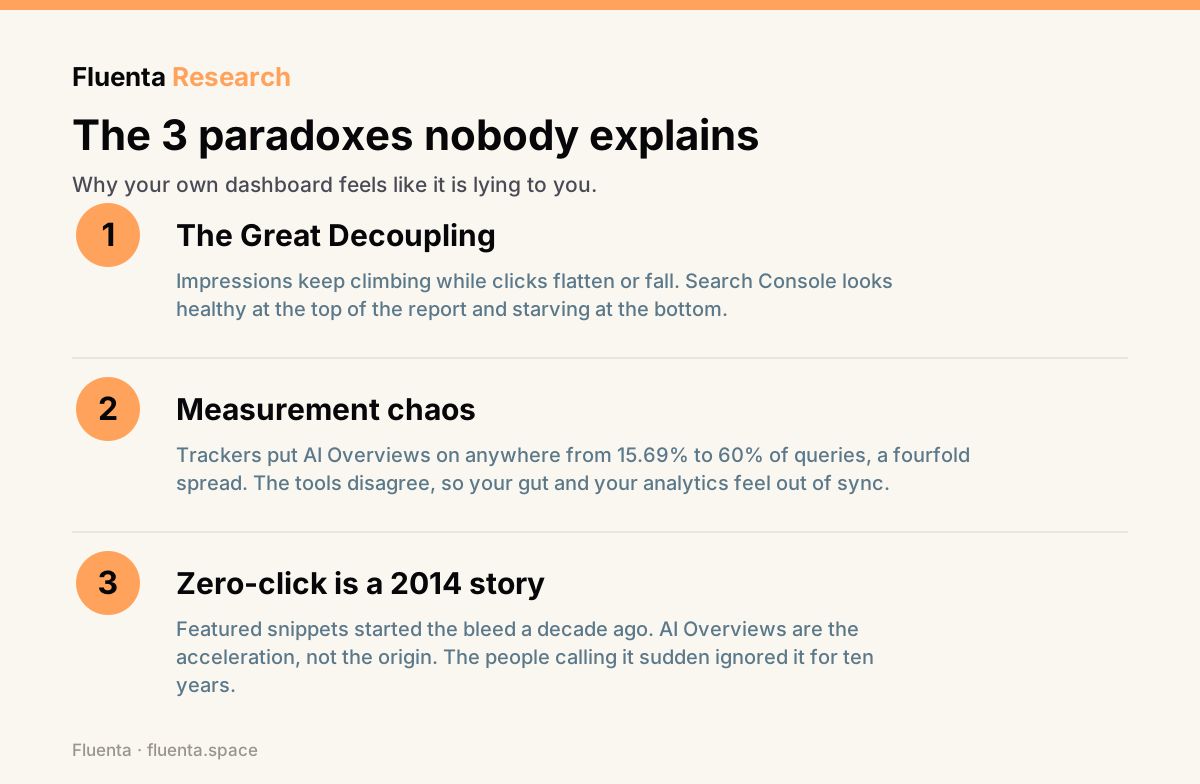
The first is the Great Decoupling. Impressions keep climbing while clicks flatten or fall, so Search Console looks healthy at the top of the report and starving at the bottom. You see "impressions up" and "clicks down" on the same screen and cannot reconcile them. That is not a bug in your account. That is the entire market condition, documented by Ahrefs, rendered as one line pulling away from another.
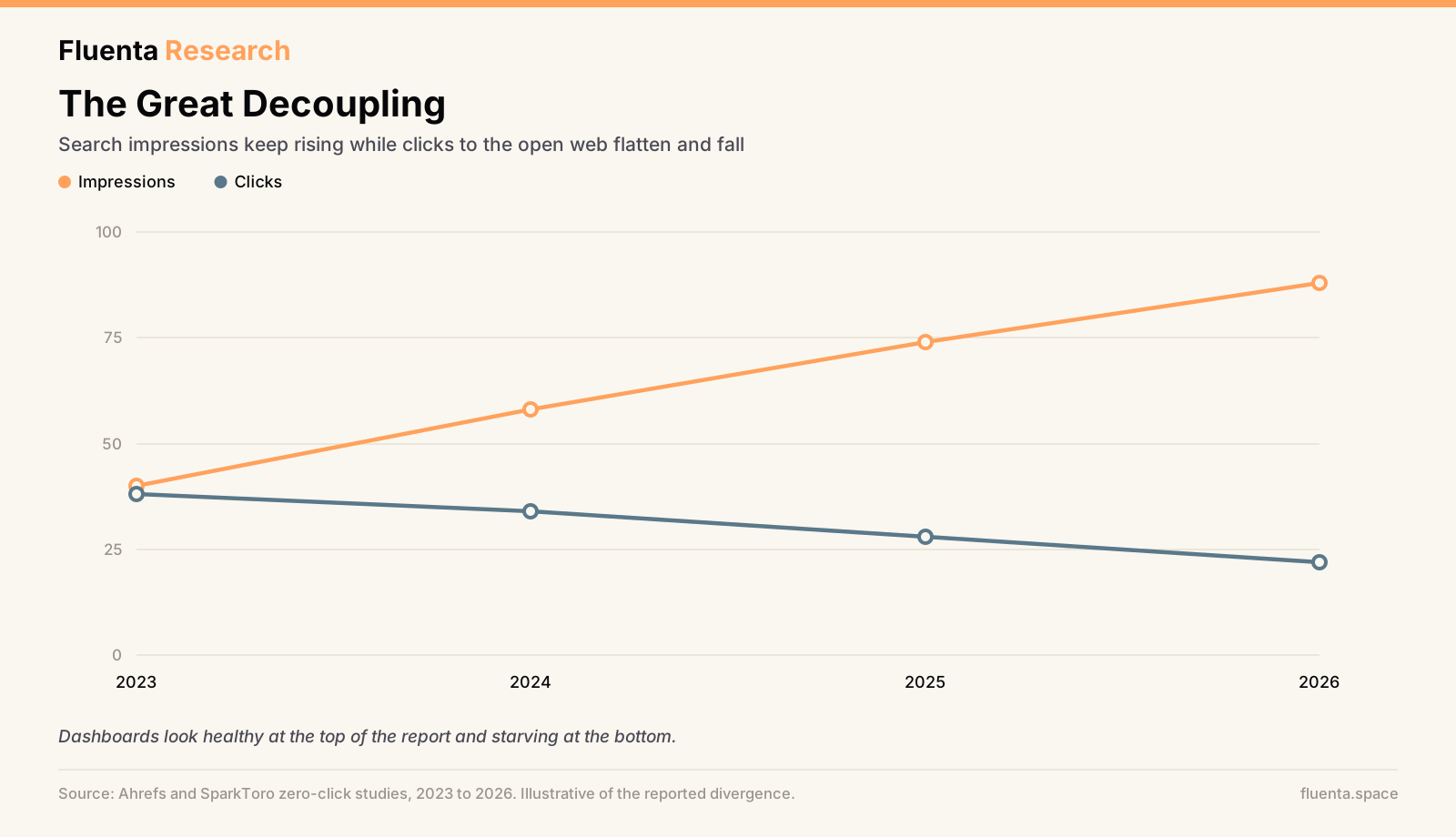
The second is measurement chaos. Nobody agrees how big AI Overviews even are. Semrush data via SeoProfy shows them on 6.49% of queries in January 2025, peaking near 24.61% in July, then settling around 15.69% by November. Meanwhile other trackers reported 48% and even 60% in the same window. That is a fourfold spread. The disagreement is the story: the ground is moving so fast the tools cannot keep their footing, so of course your gut and your analytics feel out of sync.
The third paradox is the calmest one. Zero-click is not a 2025 invention. It traces back to featured snippets, which Google launched in January 2014. The bleed started a decade ago. AI Overviews are the acceleration, not the origin. The people calling this a sudden apocalypse are, in many cases, the same ones who ignored the trend for ten years. If you want the longer playbook for defending and growing the traffic that still converts, Fluenta's guide on how to increase website traffic walks the durable channels.
What actually died, and what survived
Here is the sentence that saves you months of thrashing: informational content died, commercial content survived.
AI Overviews are ruthless with "what is" and "how does" queries because the answer fits in the box. Your definitional blog post about "what is customer churn" is now competing with a summary that already answered the question above your link. That content is not underperforming. It is obsolete as a traffic asset. Bottom-of-funnel queries behave differently. "Best tool for X," "buy," comparison, and branded or navigational searches still send clicks, because the searcher wants to choose and transact, and no summary can make that decision for them. Local intent survives for the same reason: a search like "dentist near me" ends in a booking, not a paragraph, and no summary can pick the practice for you. That is why local SEO for small business held its ground while definitional content collapsed.
This is also why UGC ate your lunch. SEOcrawl found that the combined top-10 presence of Reddit, YouTube, Quora, and LinkedIn actually climbed during the March 2026 core update, even as individual platforms bounced around. Google is surfacing the forum thread inside the AI Overview and the top results, then citing it as a source in the answer. Your carefully optimized article is losing to a three-line comment because the model trusts the comment more.
Source: Michael Vale on LinkedIn, "Your blog post is losing to a Reddit comment"
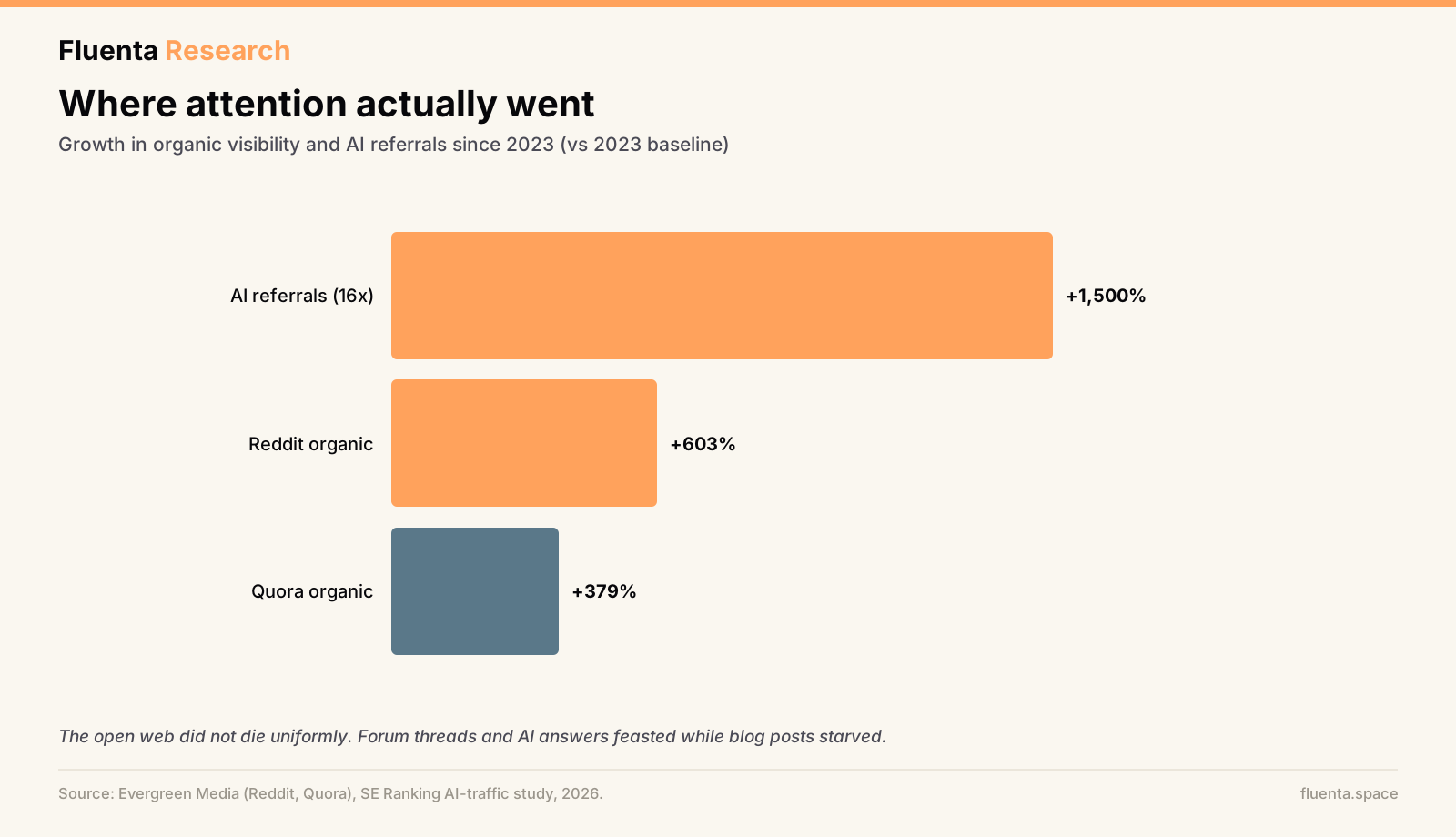
The unit of victory moved. It used to be position 1. Now it is being named inside the answer. Ranking became citation. That single shift explains the CTR collapse, the UGC surge, and the 7x conversion gap all at once, and it is the only shift you actually need to act on.
That shift has a name. Three names, in fact. Classic SEO competes for position in a list of links. Generative engine optimization (GEO) competes to be cited as a source inside an AI answer. Answer engine optimization (AEO) competes to be the answer itself. Most teams still run a single playbook against all three surfaces, which is exactly why the dashboards stopped making sense.
| Dimension | SEO | GEO | AEO |
|---|---|---|---|
| What it optimizes | Position in a list of links | Whether an engine cites you as a source | Whether you are the direct answer |
| Where it shows | Google and Bing results page | ChatGPT, Perplexity, Gemini | AI Overviews, featured snippets |
| Success metric | Position, clicks, sessions | Citation share, share of voice | Answer inclusion rate |
| Primary tactic | Keywords, backlinks, crawlability | Quotable structured content | Direct answer formatting, schema |
| What breaks it | Losing rankings | Blocking AI crawlers, no citable statistics | Burying the answer under preamble |
| Time to result | 3 to 6 months | Weeks, citations drift monthly | Days to weeks |
Read the middle column closely. Citation share is the metric almost nobody tracks yet, and it is the one that now decides whether a business appears inside the answer that replaced the click.
How to rank in AI Overviews and get cited by ChatGPT
Enough theory. Here is what a non-enterprise owner can do this week without buying a $2,000-a-month platform. Save the checklist, then work each step below:
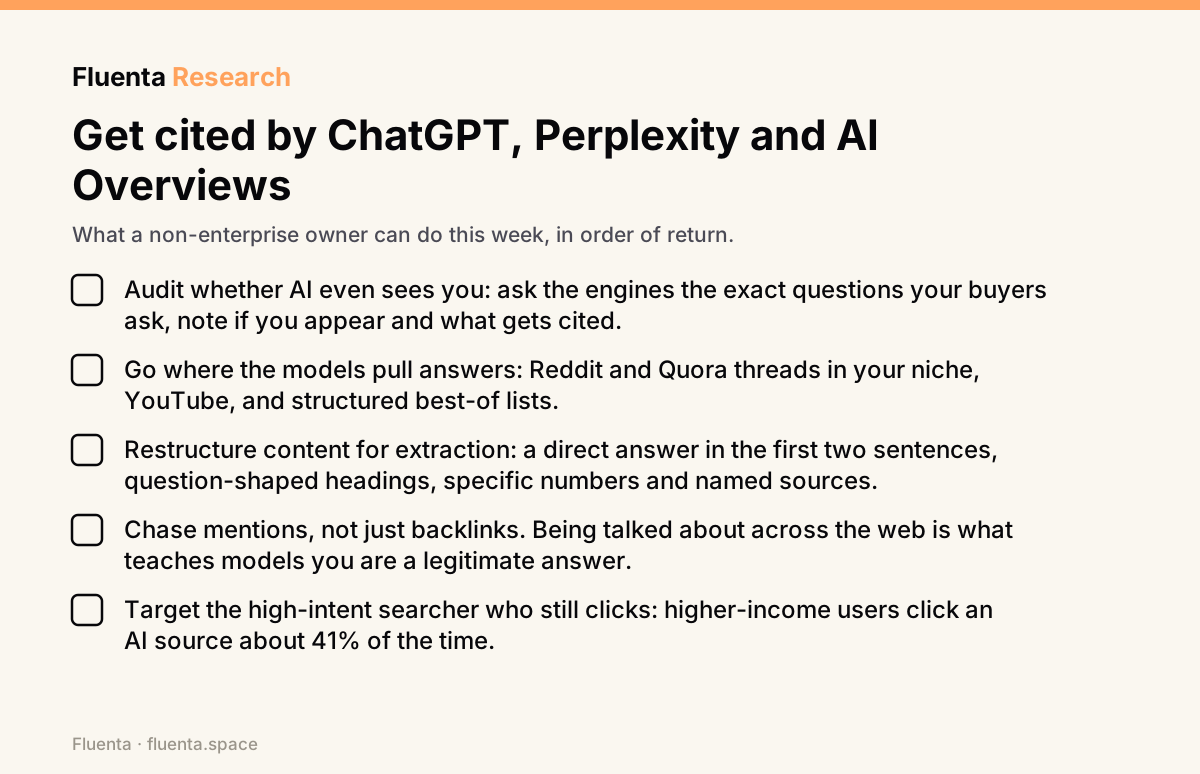
First, audit whether AI even sees you. Ask ChatGPT, Perplexity, and Google's AI Mode the exact questions your buyers ask, and note whether your brand appears and what sources the models cite. If a competitor or a Reddit thread shows up and you do not, that gap is your entire problem stated plainly.
Second, go where the models pull answers. That means being present and useful in the places AI cites: Reddit threads in your niche, Quora questions, YouTube, and structured listicles. A single genuinely helpful comment in the right thread can outrank a year of blog posts, because the model is reading that thread to build its answer.
Third, restructure content for extraction, not just ranking. Lead with a direct answer in the first two sentences. Use clear question-shaped headings. Add specific numbers, named sources, and quotable statements the model can lift cleanly. AI Overviews reward the page that makes the answer easy to copy.
Fourth, chase mentions, not just backlinks. Brand mentions are becoming the new backlinks. Being talked about across the web, in reviews, roundups, and discussions, is what teaches the models your brand is a legitimate answer. Neil Patel documented a case where a company optimizing for both ranking and citation saw a 2012% increase in traffic from LLMs. Treat that as directional, not a guarantee, but the direction is clear.
Fifth, target the high-intent searcher who still clicks. Exploding Topics found that only 18.6% of users usually click a source link in an AI Overview, but that jumps to 41.2% among households earning $200,000 or more. Your most valuable buyers are still clicking through. Write for them, at the bottom of the funnel, where the transaction lives.
If manually testing yourself across every AI engine sounds like a second job, that is the exact gap Fluenta closes. A free AI website visibility audit from Fluenta Magnet shows you whether ChatGPT, Perplexity, and Google's AI answers currently recommend you, name the competitors winning the citation, and hand you the fix list before your traffic slides further.
So, is SEO dead?
No. The ten blue links are dying, and Google is the one killing them. SEO, the discipline of being found by people who are ready to act, is not just alive, it is arguably more valuable now that AI pre-qualifies every visitor it sends.
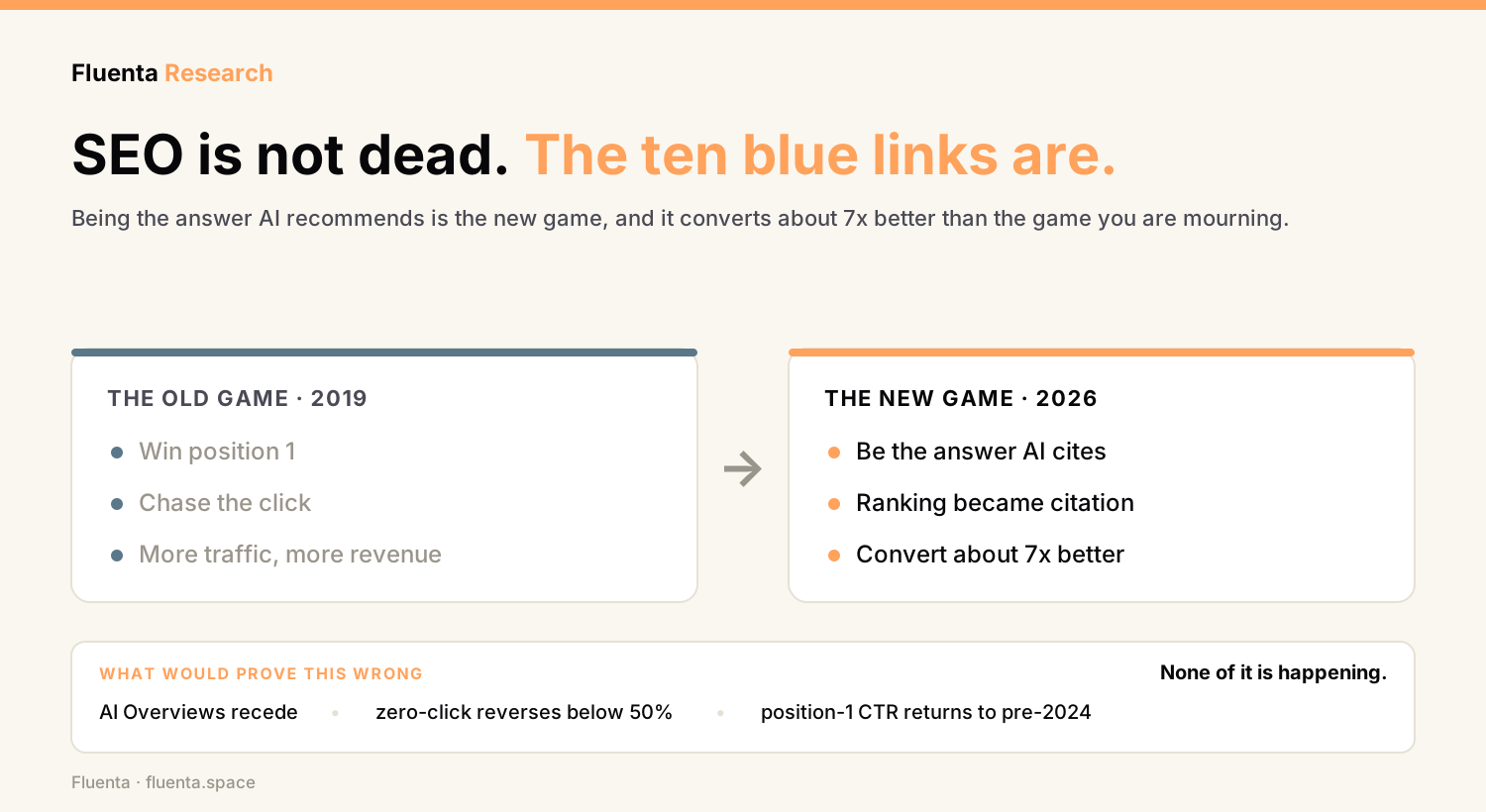
The honest verdict in one breath: the doom data is real, so stop pretending 2019 tactics still work. The recovery data is also real, so stop panicking and start optimizing for citation instead of position. Informational blog traffic is not coming back. Being the answer AI recommends is the new game, and it converts about 7x better than the game you are mourning. What would prove this wrong is simple to state: if AI Overviews recede, zero-click reverses below 50%, and position-1 organic CTR climbs back to pre-2024 levels, then the old playbook returns. Nothing in the current data points that way. The move is not to grieve the blue links. It is to go get cited.
FAQ
Is SEO dead in 2026?+
No. Search behavior changed, but Google still drives roughly 89% of US web traffic. What died is the reliable click from a top-ten ranking: AI Overviews now answer many queries in place, cutting the No. 1 result's clicks by about 58%. The discipline of being found is alive; the ten-blue-links layout is fading.
Is SEO worth it in 2026?+
For commercial, branded, and bottom-of-funnel queries, yes. Those still send clicks because the searcher wants to choose and buy. Purely informational content is the part being absorbed by AI answers. The higher return now comes from being cited inside AI answers, where the referred visitor converts around 7x better.
What is the difference between SEO, GEO, and AEO?+
SEO competes for position in a list of links. Generative engine optimization (GEO) competes to be cited as a source inside an AI answer. Answer engine optimization (AEO) competes to be the answer itself. Most businesses now need all three, and each is measured by a different number: position, citation share, and answer inclusion rate.
Why did my traffic drop after AI Overviews?+
Because an AI Overview now sits above the results and answers the query, so fewer people click through even when the ranking is unchanged. Ahrefs measured a 58% click drop for the No. 1 position on queries with an AI Overview. Impressions can stay flat or rise while clicks fall, a pattern called the Great Decoupling.
How do I rank in AI Overviews?+
Answer the exact sub-question in clear language, earn mentions across the sources the models read (Reddit, third-party best-of lists, structured data), and keep commercial pages fast and well-marked. Being consistently described and cited across the open web matters more than a single ranked page.
Will AI replace SEO?+
It is replacing one output of SEO, the ranked list of links, not the goal. The work shifts from earning a position to earning a citation inside the answer. Brand mentions are becoming the new backlinks, and being the named source is the new position one.
Cite this article
Researchers and journalists: this article is freely citable. Click to copy the academic-format reference for your bibliography or footnote.
Ivanov, O. (2026). Is SEO Dead? What Changed in 2026, and What Works. Fluenta. Retrieved from https://fluenta.space/resources/guides/is-seo-dead.
About the author

Oleg Ivanov
Co-founder & CEO, Fluenta
Oleg is co-founder and CEO of Fluenta. He spent the last decade shipping products across fintech, commerce, and AI tooling, and now leads Fluenta's work scoring startup ideas against 25 live market and social data feeds.
Related Resources
Website Traffic 2026
How to Increase Website Traffic When Google Sends Less
Your rankings held but traffic fell. The 2026 data on why, plus a barbell playbook to diversify off Google and get found inside AI assistants.
Local SEO Guide 2026
Local SEO for Small Business in 2026: Google and AI
Google AI Overviews now hit 68% of local searches. How small businesses win local SEO on both layers: the map pack and AI.
ANSWER ENGINE OPTIMIZATION
What Is AEO? Answer Engine Optimization Explained (2026)
Answer engine optimization (AEO): how a brand gets cited inside AI answers from ChatGPT, Perplexity, and Google AI, why it matters, and how to do it.
Find out if AI recommends your business
Fluenta Magnet checks whether ChatGPT, Perplexity and Google AI Overviews name your business or your competitor, then ships the fixes. Free, human-checked, in 24 hours.
Was this helpful?