How to Track Your AI Visibility Across AI Engines

AI visibility tracking is the ongoing measurement of whether ChatGPT, Perplexity, Google AI, and Gemini name a brand when customers ask them for a recommendation, and how that changes over time. It is not a one-time check, and it is not a ranking. Because answer engines generate a fresh response every time, tracking AI visibility means measuring an appearance rate across many prompts and engines, then watching it move. This guide covers what to track, how to track it, and the metric to ignore. The starting point is a single free AI visibility audit that establishes the baseline everything else is measured against.
Key Takeaways
Why can't you just check once?
Because the answer changes every time you ask.
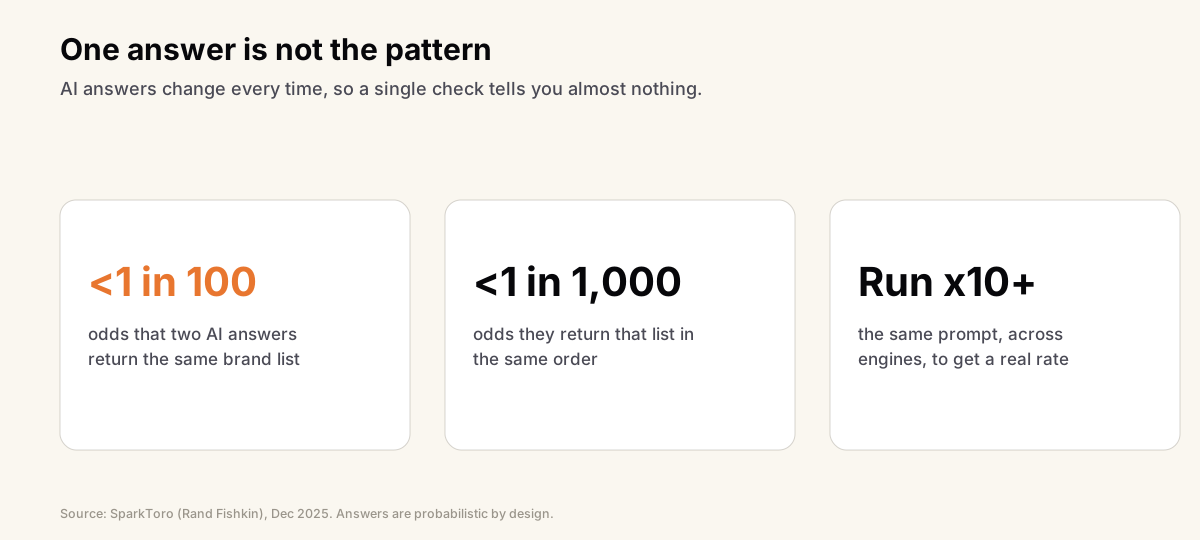
SparkToro's research found that the odds of two AI answers returning the same list of brands are less than 1 in 100, and the odds of the same order are less than 1 in 1,000. A single query is a coin flip, not a measurement. Real tracking runs each prompt several times, across several engines, and reports how often a brand appears.
“Any tool that gives a 'ranking position in AI' is full of baloney”
What should you track?
Four things, in order of importance. Position is not one of them.
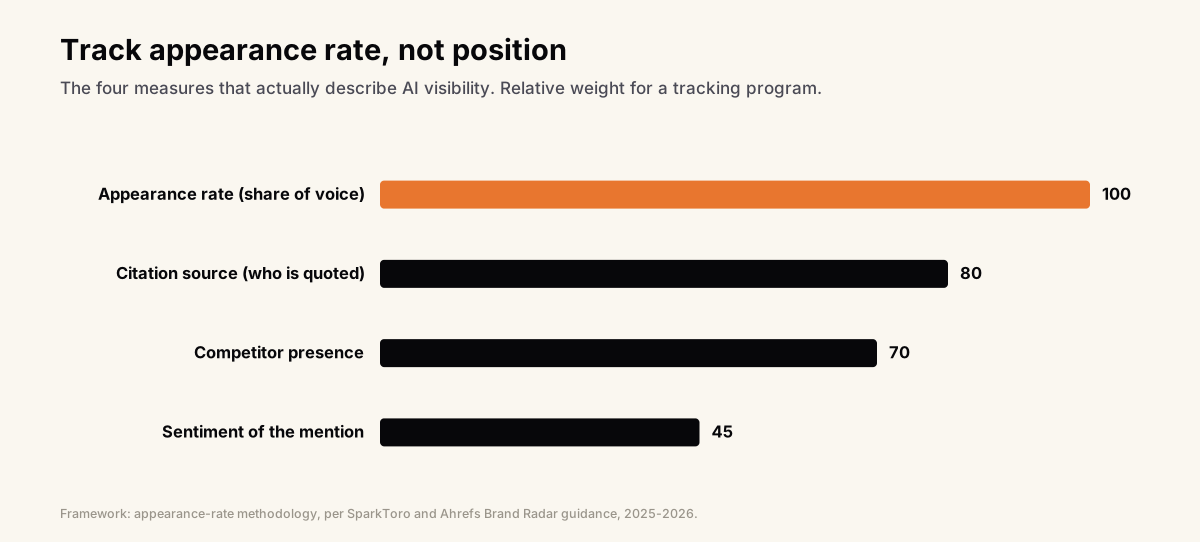
The primary metric is appearance rate, also called share of voice: out of every prompt you test, how often does the AI name your brand, expressed as a percentage against named competitors. Underneath it: which source the AI cited when it did name you, whether a competitor was named instead, and the sentiment of the mention. Together these describe your position in the answer far better than any invented rank number.
“Visibility % across dozens to hundreds of prompts run multiple times is a reasonable metric”
How do you track AI visibility, step by step?
The method is the same whether you do it by hand in a spreadsheet or with a tool.
| Step | What to do | Why |
|---|---|---|
| 1 | Write the prompts real buyers use (category and best-for, not just your name) | Category prompts are where brands vanish |
| 2 | Run each across ChatGPT, Perplexity, Gemini, Google AI Overviews | Visibility differs sharply by engine |
| 3 | Repeat each prompt 10 or more times | One run is a coin flip, not a rate |
| 4 | Log appearance, citation source, competitor named, sentiment | Turns anecdote into a tracked metric |
| 5 | Express as appearance rate vs competitors, and chart it monthly | Movement over time is the real signal |
The cadence matters as much as the method. A monthly pass is enough to catch drift for most brands; weekly if you are actively working on visibility and want to see the fix land. What does not work is a single check treated as a verdict.
Do you need a tool, or is manual enough?
Manual tracking, running prompts across engines and logging results, is honest and free, and it is the right starting point for a small brand. It gets tedious fast at scale, which is where the AI visibility tools earn their subscription: they automate the prompt runs, aggregate share of voice, and chart it over time. The important thing is that a tool changes the labor, not the metric. Whether by hand or by dashboard, the number that matters is appearance rate over repeated prompts.
“In a zero-click world, the conversation between consumers and an AI agent is the new first impression”
Check AI visibility for my website
Free. No subscription, no card. 24 hour turnaround, checked by a human analyst.
What is the one metric to ignore?
Any single "your AI rank is 3" number. Answer engines do not rank in a stable order, so a tool that reports a fixed position is measuring noise and presenting it as signal. Track the rate at which you appear, track where the citations come from, and track both over time. That is what tells you whether the work is moving the answer.
Every figure here is attributed: SparkToro for the answer-inconsistency data and the visibility-percentage guidance. Figures are 2025 to 2026.
See whether ChatGPT, Perplexity, and Google AI name your business. Run a free AI visibility audit. →
FAQ
What is AI visibility tracking?+
AI visibility tracking is the ongoing measurement of how often and how favorably AI answer engines such as ChatGPT, Perplexity, and Google AI name or cite a brand when users ask for recommendations, tracked over time as an appearance rate rather than a fixed rank.
How do you track your visibility in AI search?+
Write the category prompts your buyers use, run each several times across ChatGPT, Perplexity, Gemini, and Google AI Overviews, and log whether your brand appears, which source is cited, and whether a competitor appears instead. Express the result as an appearance rate against competitors and chart it monthly.
How often should you check AI visibility?+
Monthly is enough to catch drift for most brands; weekly if you are actively improving visibility and want to see changes land. A single check is not tracking, because AI answers vary every time.
Do I need a tool to track AI visibility?+
No. Manual tracking across engines is free and honest and is the right start for a small brand. Tools automate the repeated prompt runs and chart share of voice over time, which saves labor at scale, but the metric, appearance rate, is the same either way.
What AI visibility metric should I ignore?+
Ignore any fixed AI ranking number. Answer engines generate a different response each time and do not rank sources in a stable order, so a reported rank of 3 is measuring noise. Track appearance rate and citation source over time instead.
Cite this article
Researchers and journalists: this article is freely citable. Click to copy the academic-format reference for your bibliography or footnote.
Ivanov, O. (2026). How to Track Your AI Visibility Across AI Engines. Fluenta. Retrieved from https://fluenta.space/resources/guides/how-to-track-your-visibility-in-ai-search.
About the author

Oleg Ivanov
Co-founder & CEO, Fluenta
Oleg is co-founder and CEO of Fluenta. He spent the last decade shipping products across fintech, commerce, and AI tooling, and now leads Fluenta's work scoring startup ideas against 25 live market and social data feeds.
Related Resources
ANSWER ENGINE OPTIMIZATION
What Is AEO? Answer Engine Optimization Explained (2026)
Answer engine optimization (AEO): how a brand gets cited inside AI answers from ChatGPT, Perplexity, and Google AI, why it matters, and how to do it.
AI VISIBILITY · TOOLS COMPARED
AI Visibility Tools Compared (2026): Do They Get You Cited?
Six AI-visibility tools compared on the one question that matters: do they only track whether ChatGPT names you, or do they actually get you cited?
AI VISIBILITY AUDIT
AI Visibility Checker: Is ChatGPT Recommending You? (2026)
AI visibility is whether ChatGPT, Perplexity, and Google AI name your brand. How to audit it, why 89% of brands are absent, and what makes AI recommend you.
Find out if AI recommends your business
Fluenta Magnet checks whether ChatGPT, Perplexity and Google AI Overviews name your business or your competitor, then ships the fixes. Free, human-checked, in 24 hours.
Was this helpful?