Local SEO for Small Business in 2026: Google and AI

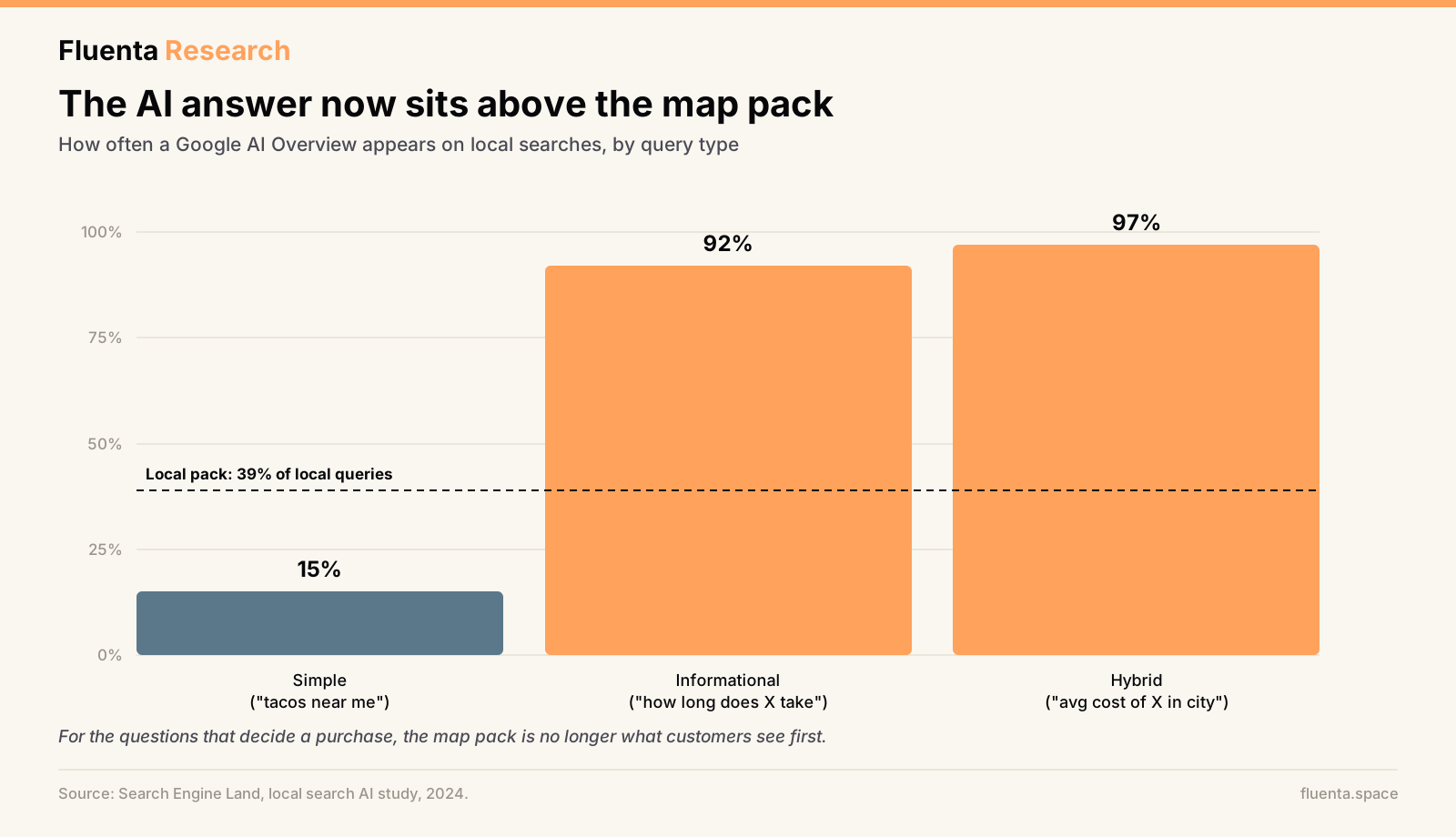
In 2026, the way a customer finds a local business split into two paths, and most owners only know about one of them. Google now shows an AI Overview on 68% of local searches, while the familiar local map pack shows up on just 39% of them. That means for most searches, a customer reads a machine-written answer before they ever scroll to the three-business map. If you want to know whether your business is already invisible to that answer layer, start with a free AI website visibility audit from Fluenta Magnet, then come back and read how the two layers actually work.
None of this kills the old playbook. Reviews, an accurate Google Business Profile, and a clean website still decide who wins the map pack, and the map pack still drives phone calls. But the businesses pulling ahead in 2026 are the ones treating local discovery as two jobs at once: rank in Google's map, and get named when a customer asks an AI assistant "who should I call?"
Key Takeaways
Local SEO for small business still starts with Google Business Profile optimization
A complete Google Business Profile ranks 2 to 3 times higher in the local pack than an incomplete one. That figure comes from a 2025 analysis of 100 profiles, and it is the single highest-leverage move most owners have not finished making. Completeness is not a checkbox you tick once. It means the right primary category, every service listed, real hours, photos, a description, and a phone number that matches your website.
Two things break profiles more than anything else. The first is NAP inconsistency: your Name, Address, and Phone number written differently across your site, Yelp, Facebook, and old directory listings. Google reads those mismatches as uncertainty about which business is real. The second is a name that does not match your storefront and signage. Owners keep rediscovering that putting the service and city in the business name gives a Maps edge, but stuffing a name you do not actually trade under violates Google's guidelines and gets profiles suspended, so keep it to your real, registered name.
When a profile stops performing, the panic is immediate and specific:
The usual cause is not a mysterious penalty. It is a competitor who got more recent reviews, a category change, or a proximity shift. The fix is boring and it works: complete every field, keep NAP identical everywhere, and keep the profile active. This is the proven baseline, and 72% of consumers still use Google to find local business information, so the baseline is not going anywhere.
Review velocity killed review count
After Google's March 2026 core update, a business with 20 reviews from the past 90 days can outperform one with 200 reviews from two to three years ago. Recency now carries far more ranking weight than a big lifetime total. The old advice to "get to 100 reviews and coast" is dead. The new game is a steady drip that never stops.
Practitioners who track the map pack say the same thing in plainer words:
There is a second number that changes where you should spend effort. Sterling Sky's case study found that reaching 10 Google reviews is the clear inflection point for local-pack visibility, and the benefit largely plateaus right after that. For a brand-new dentist, salon, or law firm, the first 10 reviews are worth far more than reviews 50 through 100. Many owners over-invest at the wrong end of the curve, grinding for review number 80 while a competitor who just crossed 10 fresh ones climbs past them.
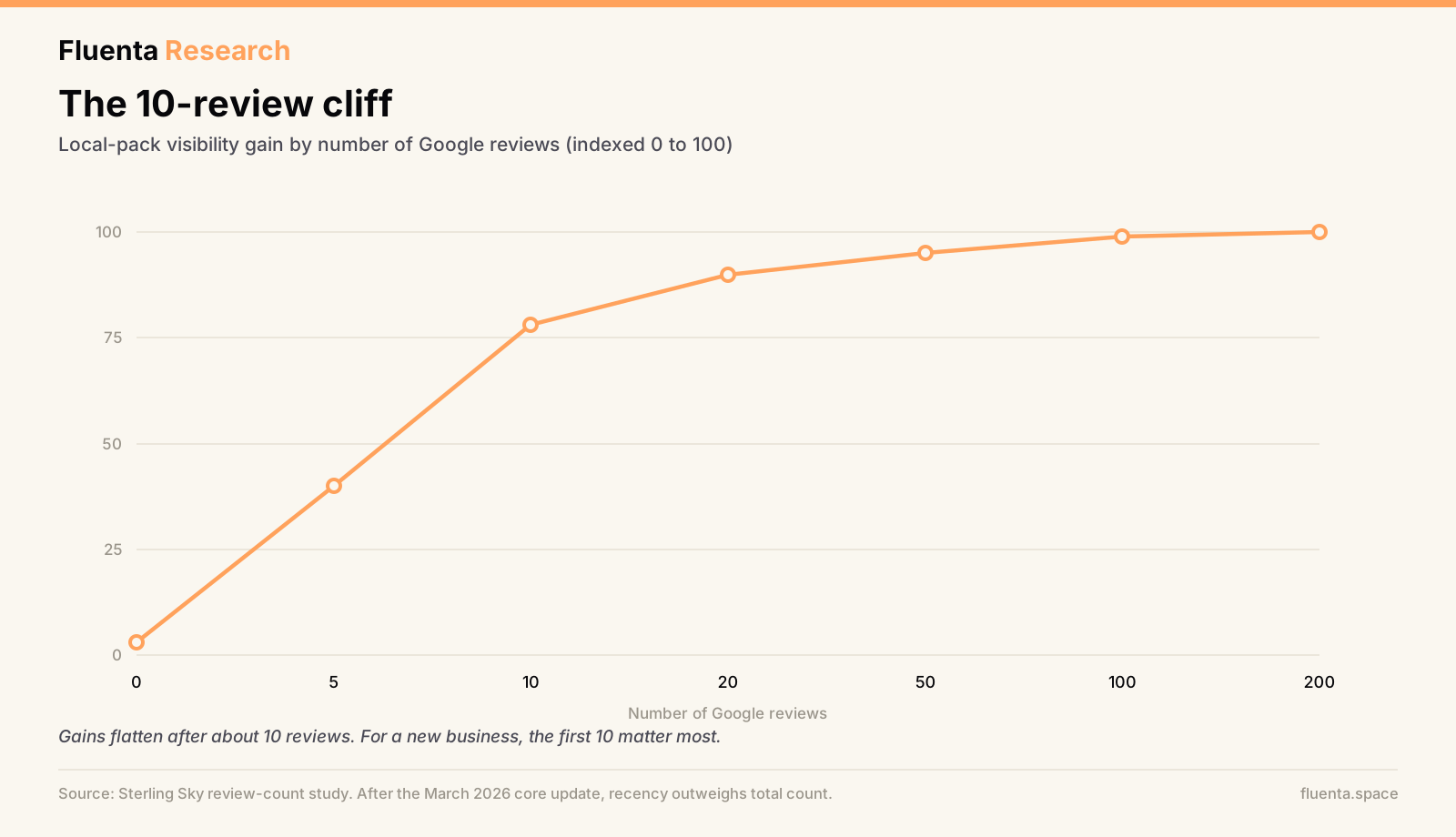
Quality still gates all of it. 97% of consumers read reviews for local businesses, and a listing that slips below roughly 4.7 stars starts to look weak to the people choosing. So the 2026 review target is not a number to reach and forget. It is a rate to hold: a handful of genuine, recent, 4.7-plus-star reviews every month, forever.
Check AI visibility for my website
Free. No subscription, no card. 24 hour turnaround, checked by a human analyst.
The new layer everyone ignores: getting recommended by AI
Here is the finding that separates 2026 from every local-SEO guide still ranking on page one: none of them mention AI at all. The five top-ranking articles for "local SEO for small business" do not use the words "AI Overview," "ChatGPT," or "Perplexity" even once, while AI Overviews now appear on 68% of local searches. That is the gap.
Local discovery now runs on two layers that reward different things. The map pack rewards proximity, prominence, and a complete profile. AI assistants reward being consistently described and cited across the open web: directories, third-party "best of" lists, structured data on your site, and the actual words inside your reviews. A business can win the map pack and still be completely absent when someone asks ChatGPT, Perplexity, or Google's AI Overview for a recommendation. That is the whole point of the "Pete's Plumbing" parable that keeps circulating:
Why does the AI skip Pete? Because ranking in Maps and being described across the web are different signals. Pete optimized for Google's map and never got named on the "best plumbers in Austin" lists, the local news roundups, or the structured data that AI systems read to decide who to name. The map cares where you are. The AI cares what the web says about you.
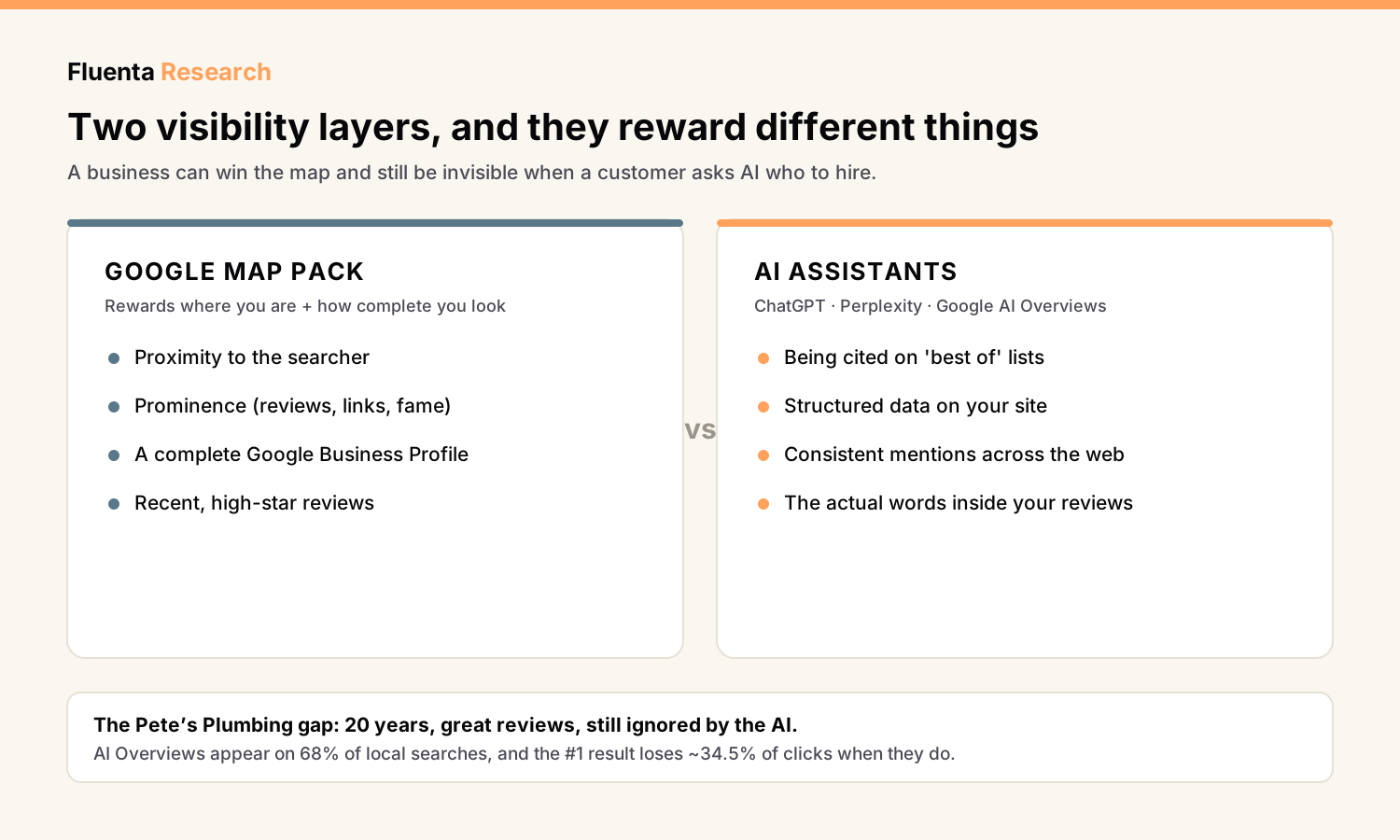
This matters because the click is disappearing before it reaches anyone. When an AI Overview appears, the #1 organic result loses about 34.5% of its clicks, and in Pew's data users clicked a link inside the AI summary in just 1% of searches. Ranking first is no longer the finish line. Being the source the AI quotes is. That is the same shift covered in is SEO dead in 2026: search did not die, it moved into the answer.
The practical move is to find out where you stand on the layer you cannot see. A free AI website visibility audit from Fluenta Magnet shows whether ChatGPT, Perplexity, and Google's AI Overviews currently mention your business when a customer asks for a recommendation in your category and city. If the answer is no, the map ranking you worked for is only doing half the job.
What it looks like by vertical: dentists, plumbers, therapists
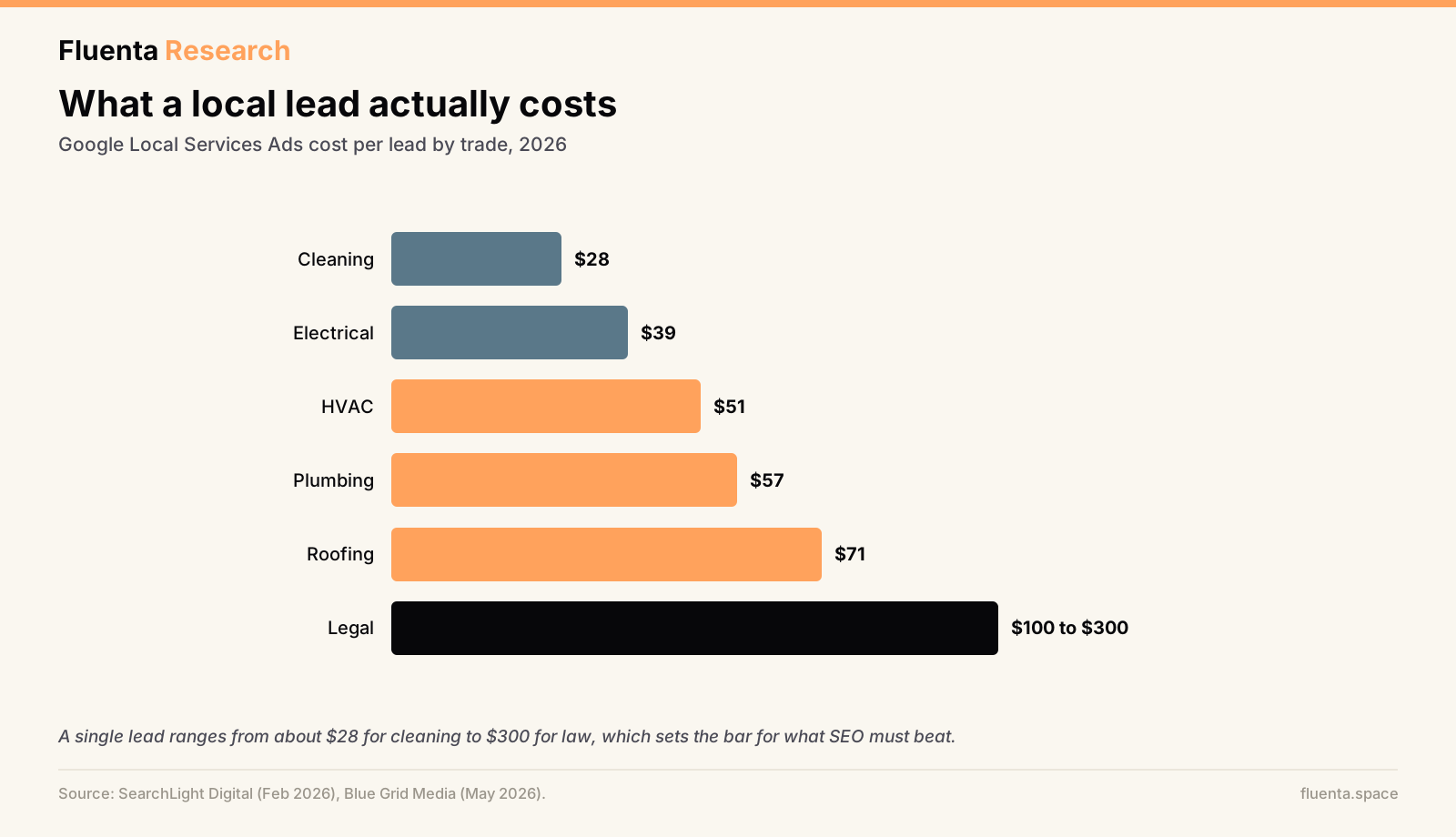
The economics decide whether local SEO is worth it, and the economics change by trade. When leads dry up, most owners reach for paid ads, and paid ads have a price you can look up. Google Local Services Ads ran about $57 per lead for plumbing, $51 for HVAC, and $39 for electrical in early 2026, with home services blending near $53 per lead. Professional services cost far more: law firms commonly pay $100 to $300 per lead. Owners feel this directly:
Those numbers are the reason organic local SEO matters. Every call your profile and reviews earn for free is a call you did not pay $57 for. But the AI layer treats verticals differently, and that difference is a moat for some businesses.
Local SEO for dentists
Health is the most AI-resistant category. 69% of consumers say they would be uncomfortable taking medical advice from AI, so even when an AI Overview names clinics, most patients still click through to read reviews and check credentials before booking. That human-verification step is where reviews and a complete profile decide the outcome. For a new clinic, the play is clear: cross the 10-review threshold fast, hold 4.7-plus stars, keep reviews recent, and make sure your name appears on local health and "best dentist" roundups so the AI has something to cite. Demand is enormous ("dentist near me" runs 754,000 US searches a month), which means the map pack and the answer box are both worth fighting for.
How to get more plumbing leads
Plumbing is the opposite: high urgency, low trust friction. When a pipe bursts, a customer will often accept whatever the AI or the map hands them first, so plumbers are the most exposed to full AI hand-off and the most rewarded for winning both layers. At roughly $57 per paid lead, every organic call is real money saved. Win it by nailing the emergency-service categories in your profile, gathering a steady stream of recent reviews that mention the specific jobs you do, and getting listed on the local directories and roundups that AI systems read. Speed of review velocity matters more here than a big historical count.
How to get more therapy clients
Therapy sits with dentistry on the trust side but with a twist: choice is deeply personal, so reviews and a clear, human profile matter even more than raw ranking. Private-practice owners feel the drought sharply, and the fix is rarely more ad spend. It is showing up complete and credible on both layers: a Google Business Profile that states specialties and insurance, recent reviews that hold above 4.7 stars, and a presence in therapist directories that AI assistants pull from. The 10-review cliff is real for solo practices, so the first handful of genuine client reviews is the highest-return work available.
Side by side, the pattern is hard to miss: the trades with the highest paid-lead cost are also the ones most exposed to an AI hand-off, which is exactly where an organic presence pays twice.
| Vertical | Paid lead cost (Google LSA) | AI hand-off risk | Highest-return move |
|---|---|---|---|
| Plumbing | $57 per lead | Highest, urgency beats trust friction | Emergency categories, review velocity, local directories |
| HVAC | $51 per lead | High | Recent reviews naming the specific jobs done |
| Electrical | $39 per lead | High | Complete profile plus steady recent reviews |
| Dentists | Professional-services rates | Low, 69% will not take medical advice from AI | Cross 10 reviews fast, hold 4.7 plus, get on best-dentist roundups |
| Therapists | Professional-services rates | Low, choice is personal | Specialties and insurance on profile, therapist directories |
| Law firms | $100 to $300 per lead | Low | Reviews plus a credible presence on both layers |
How to choose a local SEO company without getting burned
The loudest pain point in these communities is not ranking. It is being sold busy work. Owners describe paying for months of activity that moved nothing:
The tell is a provider who reports activity (directory submissions, blog posts, backlinks by the hundred) instead of outcomes (map-pack rank for your money terms, calls, and booked jobs). Ask any company three questions before you sign, and listen for outcomes in the answers:
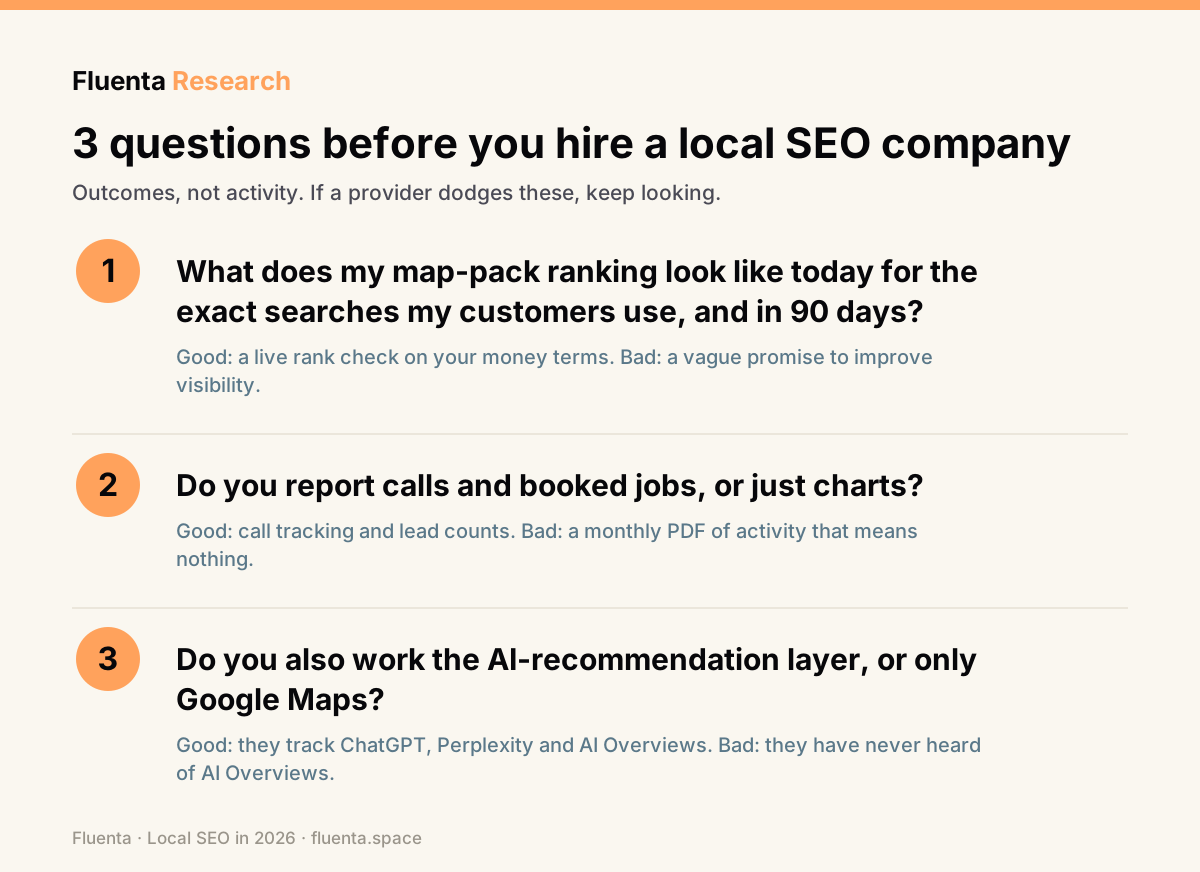
A firm that has never heard of AI Overviews is selling you the 2019 version of the job.
Avoid long lock-in contracts before you have seen a result. The honest providers are comfortable being measured on rank and calls month to month. This is also the case for a done-for-you approach that handles both layers at once, so you are not stitching together a Maps agency and a separate AI-visibility tool while running your business.
The 2026 local SEO checklist
The proven baseline plus the two layers everyone else ignores, in order of return. Save or print this and work it top to bottom:
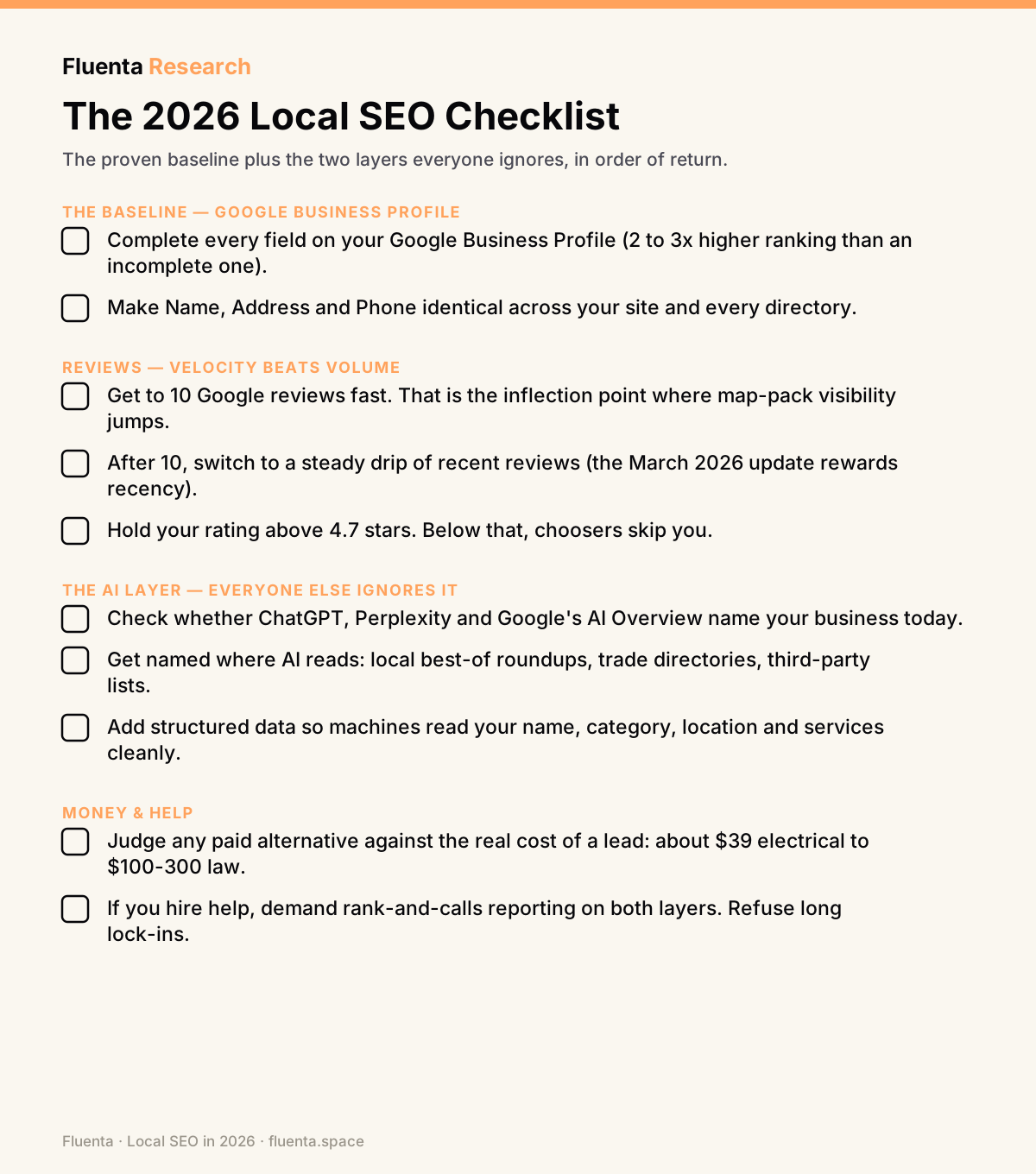
Local SEO in 2026 is not harder than it was. It is doubled. The owners who keep the boring baseline and add the AI layer are the ones whose phones keep ringing.
FAQ
Why is my business not showing up on Google Maps?+
The most common causes are an incomplete Google Business Profile, Name, Address, and Phone details that do not match across your website and directories, or a competitor who earned more recent reviews. A complete profile ranks 2 to 3 times higher than an incomplete one, so finish every field, make your NAP identical everywhere, and keep the profile active.
How many Google reviews do I need to rank in the map pack?+
Reaching 10 Google reviews is the clear inflection point for local-pack visibility, and gains largely plateau right after that (Sterling Sky). After 10, recency matters more than total count: since the March 2026 core update, 20 reviews from the past 90 days can outrank 200 older ones. Get to 10 fast, then keep a steady drip and hold above 4.7 stars.
How do I choose a local SEO company without getting burned?+
Avoid providers who report activity like directory submissions and blog counts instead of outcomes like map-pack rank, calls, and booked jobs. Ask what your ranking is today for your exact customer searches and what it will be in 90 days, whether they report calls or just charts, and whether they work the AI-recommendation layer or only Google Maps. Refuse long lock-in contracts before you see movement.
How do I get my business recommended by ChatGPT and AI?+
Ranking in Google Maps and being recommended by AI are different signals. AI assistants name businesses that are consistently described and cited across the open web: local 'best of' roundups, trade directories, third-party lists, structured data on your site, and the text inside your reviews, all with consistent business details. Winning the map pack alone can still leave you invisible to ChatGPT, Perplexity, and Google AI Overviews.
How much does a local lead cost?+
Google Local Services Ads ran about $57 per lead for plumbing, $51 for HVAC, and $39 for electrical in early 2026, with home services blending near $53 per lead. Professional services such as law firms commonly pay $100 to $300 per lead. Every call your profile and reviews earn organically is a lead you did not pay those rates for.
How much does local SEO cost?+
Quotes vary widely and most are not comparable, so the useful frame is the alternative. Google Local Services Ads run about $57 per lead for plumbing, $51 for HVAC, $39 for electrical, and $100 to $300 for law firms. A retainer pays for itself at a modest number of organic calls. Judge a quote on whether it buys results or activity, and avoid a long lock-in contract before you have seen a result.
How do I rank higher on Google Maps?+
Start with a complete Google Business Profile, which ranks 2 to 3 times higher in the local pack than an incomplete one, then fix any name, address, or phone inconsistency across directories. After that, work review velocity rather than review count: 10 reviews is the inflection point for local-pack visibility, and recent reviews matter more than a large historical total. Choose precise categories, including emergency-service categories if you offer them.
Cite this article
Researchers and journalists: this article is freely citable. Click to copy the academic-format reference for your bibliography or footnote.
Ivanov, O. (2026). Local SEO for Small Business in 2026: Google and AI. Fluenta. Retrieved from https://fluenta.space/resources/guides/local-seo-for-small-business.
About the author

Oleg Ivanov
Co-founder & CEO, Fluenta
Oleg is co-founder and CEO of Fluenta. He spent the last decade shipping products across fintech, commerce, and AI tooling, and now leads Fluenta's work scoring startup ideas against 25 live market and social data feeds.
Related Resources
SEO in 2026
Is SEO Dead? What Changed in 2026, and What Works
797,444 impressions, 7 clicks. The hard 2026 data on what died in SEO, what still works, and how to get cited by ChatGPT and AI Overviews.
Website Traffic 2026
How to Increase Website Traffic When Google Sends Less
Your rankings held but traffic fell. The 2026 data on why, plus a barbell playbook to diversify off Google and get found inside AI assistants.
Local SEO Guide
Local SEO for Dentists: Fill Your Chairs
How patients choose a dentist through the map pack, reviews, and AI answers, why most practices are invisible to AI, and how to fix it.
Find out if AI recommends your business
Fluenta Magnet checks whether ChatGPT, Perplexity and Google AI Overviews name your business or your competitor, then ships the fixes. Free, human-checked, in 24 hours.
Was this helpful?