AI Visibility Audit: 100 Sites, 89% Invisible to AI

Ask ChatGPT or Perplexity for the best company in a category, and for most businesses the assistant names a competitor. Across the first 100 AI visibility audits run by Fluenta Magnet, 89% of businesses were not recommended by a single AI engine when a buyer asked for the best option in their category. The cause is rarely a broken website. The engines usually knew the brand existed. They just did not say the name when a customer was choosing.
Each audit queries six AI answer engines live, checks whether 14 crawlers can read the site, benchmarks authority against real competitors, and surfaces the exact search terms the business could own. This report is what those 100 audits show, and the routine that closes the gap.
Key Takeaways
Who these 100 businesses are
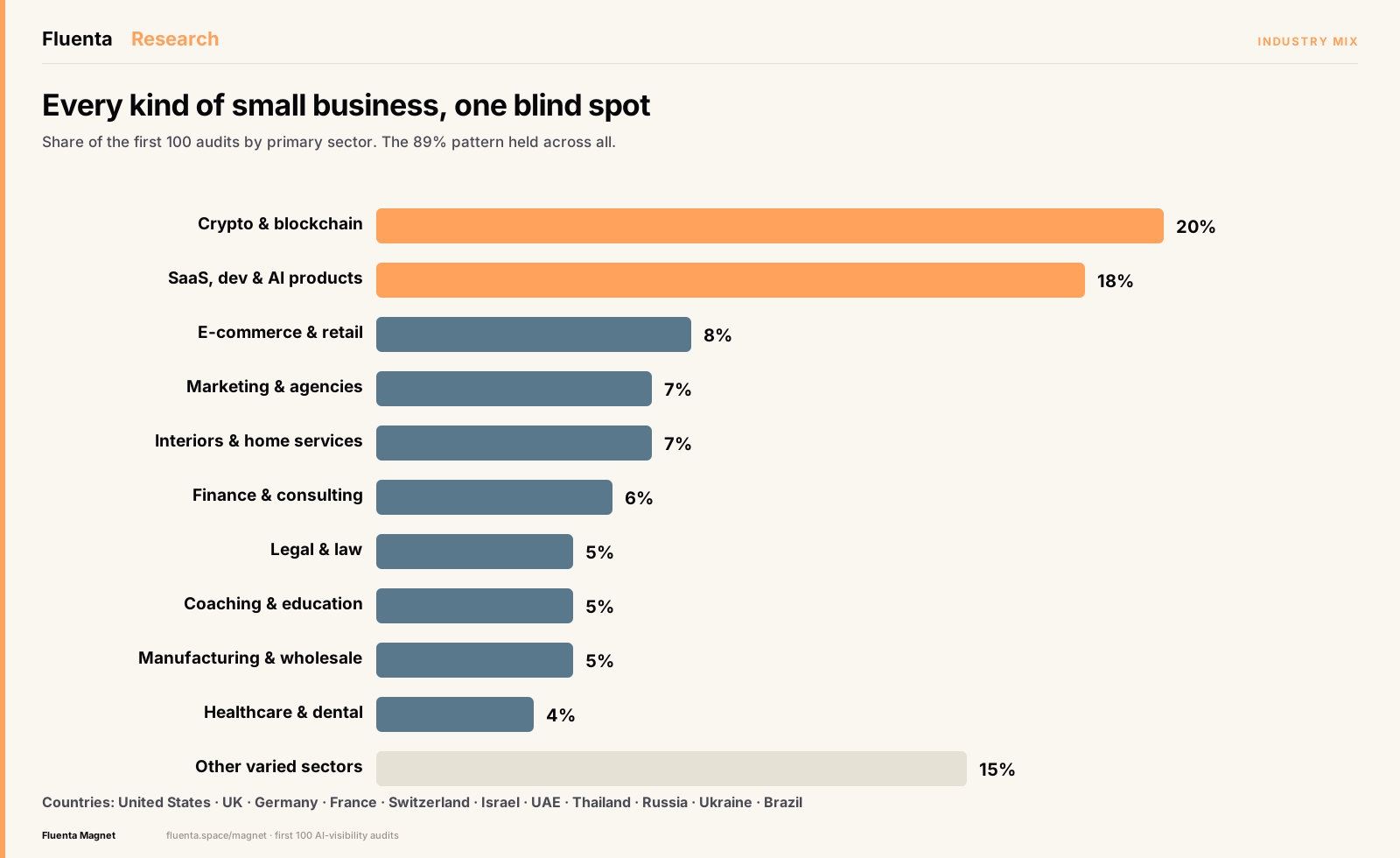
The audits are not one industry or one country. They cover crypto and blockchain exchanges, law firms, dental and medical clinics, business coaches and psychologists, real estate agencies, ski-transfer and transport services, online schools and children's education, e-commerce and fashion shops, insurance platforms, fintech and payments, SaaS and AI products, marketing agencies, manufacturing and logistics, and local trades like plumbing. The businesses operate in more than a dozen countries, including the United States, the United Kingdom, Germany, France, Switzerland, Israel, the United Arab Emirates, Thailand, Russia, Ukraine and Brazil. The pattern below held across all of them.
What an AI visibility audit actually checks
An AI visibility audit is not a brand-name lookup. Typing a company into six chatbots would tell a founder almost nothing. Each Fluenta Magnet audit runs six checks and returns a working file, not a score alone.
1. Can the machines read you. 14 crawlers are tested for access, including Googlebot, Bingbot, GPTBot, OAI-SearchBot, ChatGPT-User, ClaudeBot, PerplexityBot, Google-Extended, AhrefsBot and Applebot. These are the bots that feed both classic search and the AI engines.
2. Do the AI engines know and recommend you. Six live answer engines, ChatGPT, Perplexity, Gemini, Claude, Grok and Google AI Mode, plus Microsoft Copilot, are queried twice: do they recognize the brand, and do they name it when a buyer asks for the best in the category. Regional answer engines are added where the market needs them, such as DeepSeek, Baidu, Qwen, Doubao, Kimi, YandexGPT, GigaChat, Mistral and Naver.
3. How you rank against real competitors. Domain Rating, monthly organic traffic and referring domains are pulled for the business and its actual rivals, so authority is measured against the market, not in the abstract.
4. The content you could own. The audit surfaces category search terms with high demand and low difficulty, the topics a business can realistically rank for and get cited on.
5. Who is searching and why. From the competitive analysis it extracts the ideal customers, the jobs they are trying to do, and the pain and switching signals behind their searches. That is the raw material for content that actually converts.
6. The junk dragging you down. It produces a ready disavow file of the spam domains linking to the site, plus a short list of the first fixes to make in a single day.
Run this exact audit on your website
Free. No subscription, no card. 24 hour turnaround, checked by a human analyst.
How visible is the average business to AI?
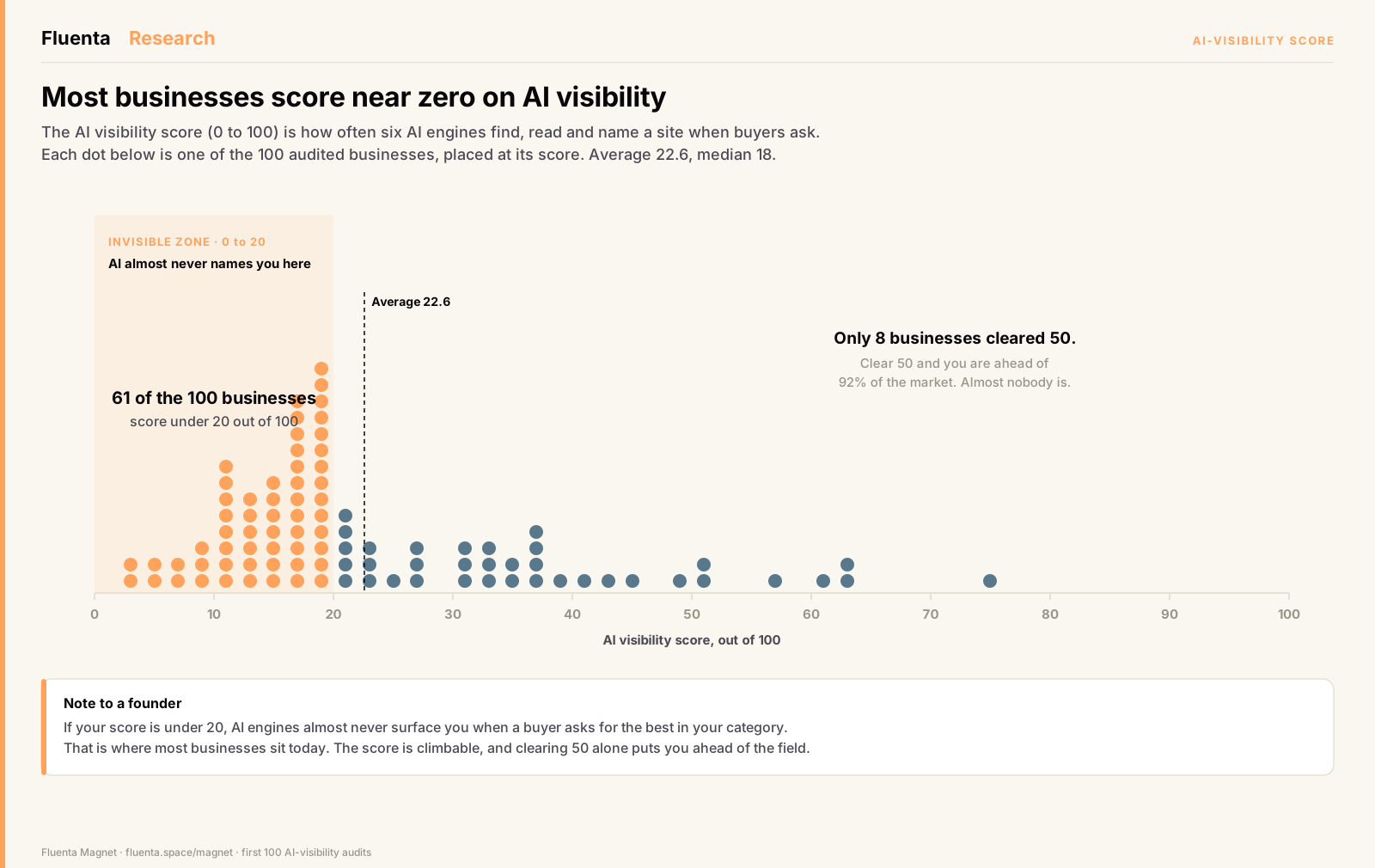
Barely. The average AI visibility score across the 100 audits was 22.6 out of 100, and the median was 18. The score is how often the six engines find, read and cite a site.
For most businesses, the honest reading today is that AI does not yet treat them as an answer.
Do AI engines know your brand, or just refuse to recommend it?
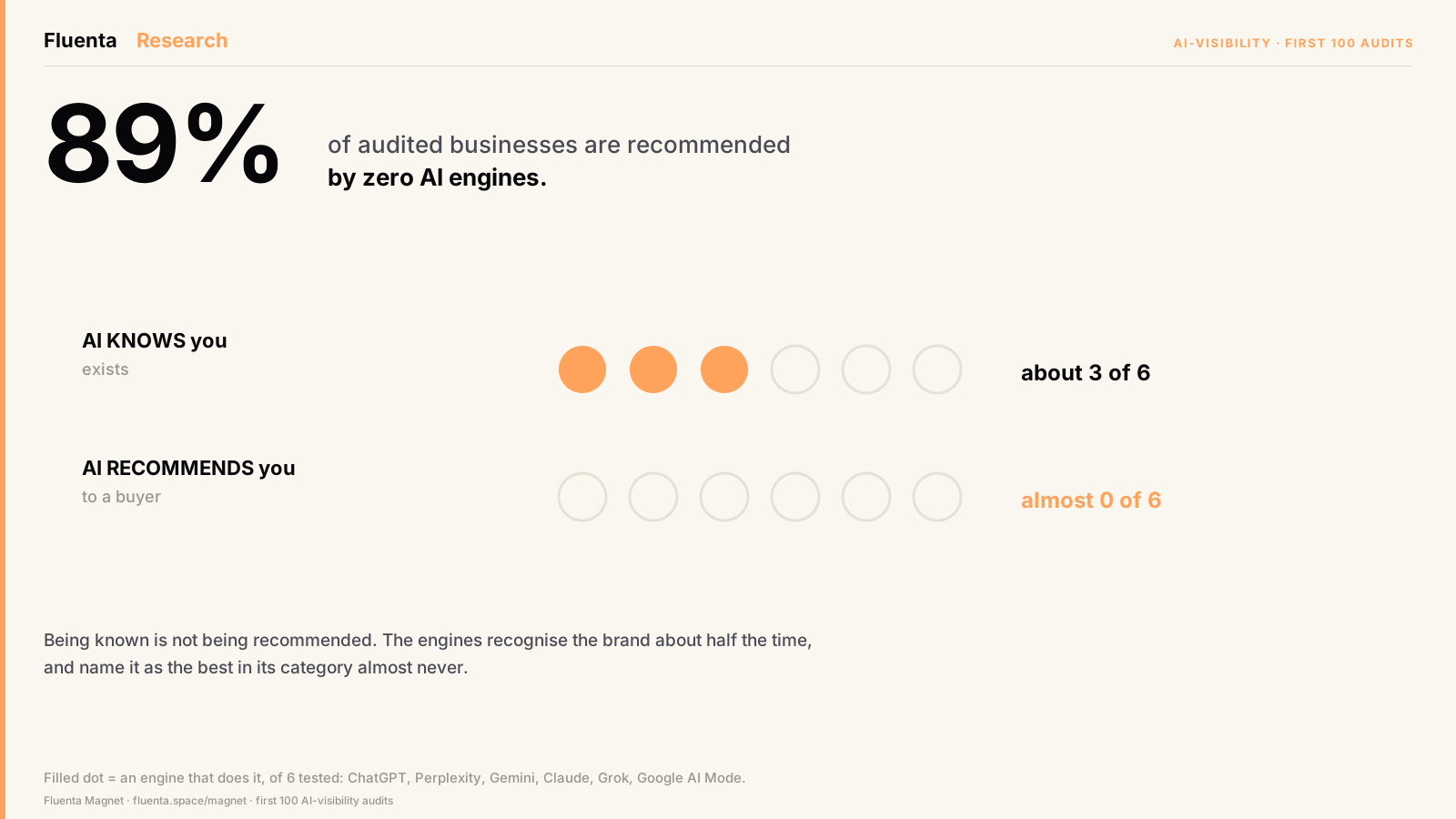
They know it and do not recommend it. Each audit asks six AI answer engines two questions. On brand recognition, the average business was known by about 3 of the 6 engines. On recommendation, when a buyer asked for the best in the category, the average business was named by almost none of the 6, and 89% were named by zero. Recognition is not the bottleneck. Being chosen is.
The silence is not neutral. When an engine does not name the audited business, it names a specific rival instead. In one insurance-software audit the assistants skipped the site and listed Guidewire, Sapiens and Duck Creek by name. Every unprompted recommendation of a competitor is a customer handed over.
Why are spam backlinks the problem in every single audit?
Because every audited site had them. Not most. All of them. On the median site, 66% of the backlink profile was spam or low quality, and the audit flagged a median of 99 junk domains per site, with the worst carrying over 1,100. In total the 100 audits flagged more than 14,000 spam domains. AI engines and search both lean on trust signals, and a link profile that is mostly junk drags that trust down. This is the finding a business can act on without even running an audit: assume the site is carrying spam links, because effectively every site is. The fix is not clever. It is a boring weekly habit, review new links and disavow the junk, and every audit ships a ready disavow file to start with.
Is your site one of the 89% invisible to AI?
Free. No subscription, no card. 24 hour turnaround, checked by a human analyst.
What can each business actually win?
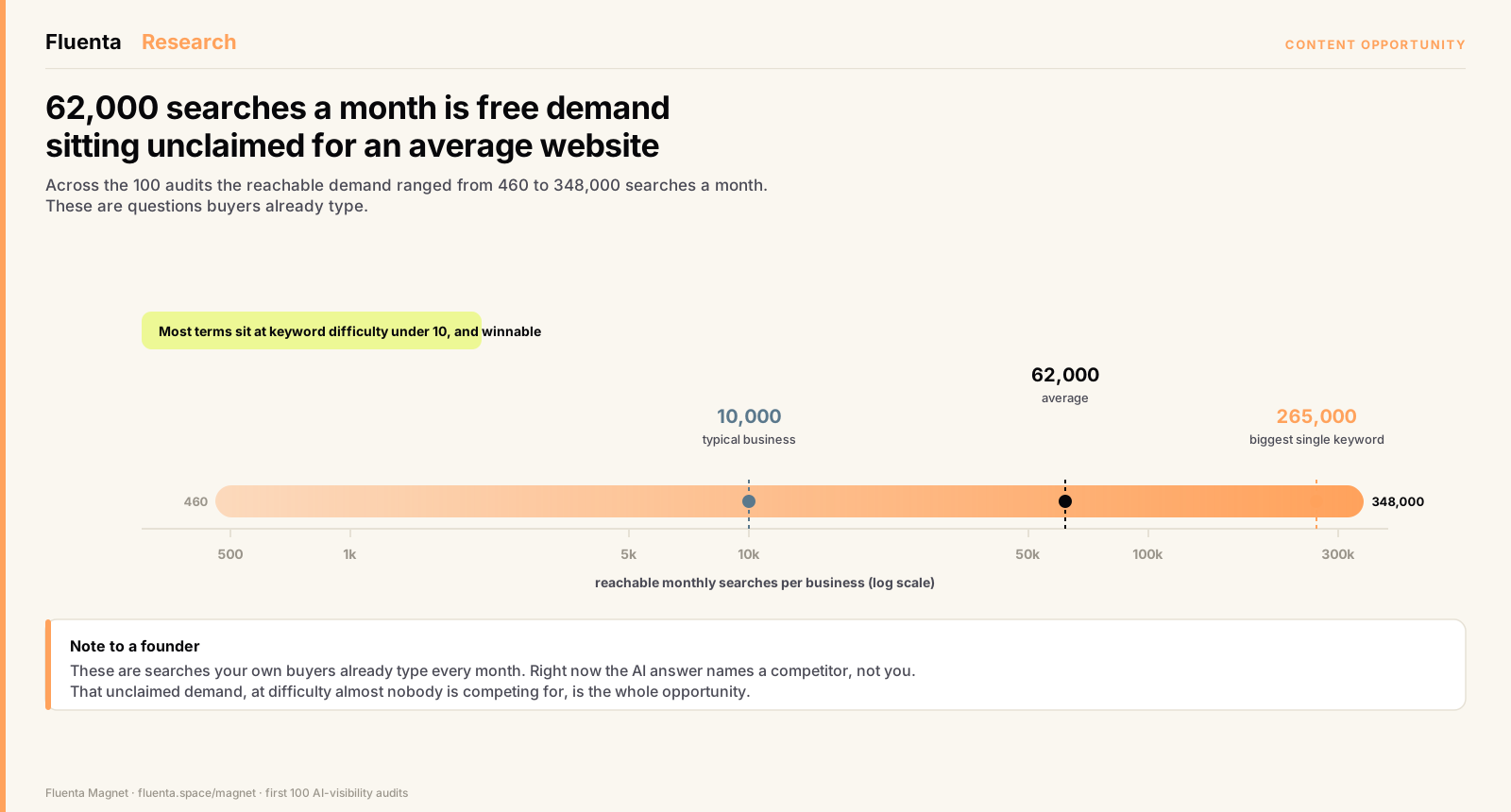
Real search demand, at low difficulty. This is the part founders underestimate. Every audit surfaces content opportunities, search terms in the business's own category with genuine monthly demand and low competition. Where the demand was measured, the reachable opportunity per business ran from about 460 to 348,000 searches a month, averaging around 62,000 a month, with a typical business near 10,000 and single keywords worth up to 265,000 searches a month. Most of those terms carried a keyword difficulty under 10. A business coach had "delegating" and "impostor syndrome" style terms pulling tens of thousands of monthly searches at difficulty 0. A discount-fashion shop had category terms at difficulty 1. These are not vanity keywords. They are the questions the business's own buyers already type, sitting unclaimed. A content flywheel exists to capture exactly this.
Which AI engines cite small brands first?
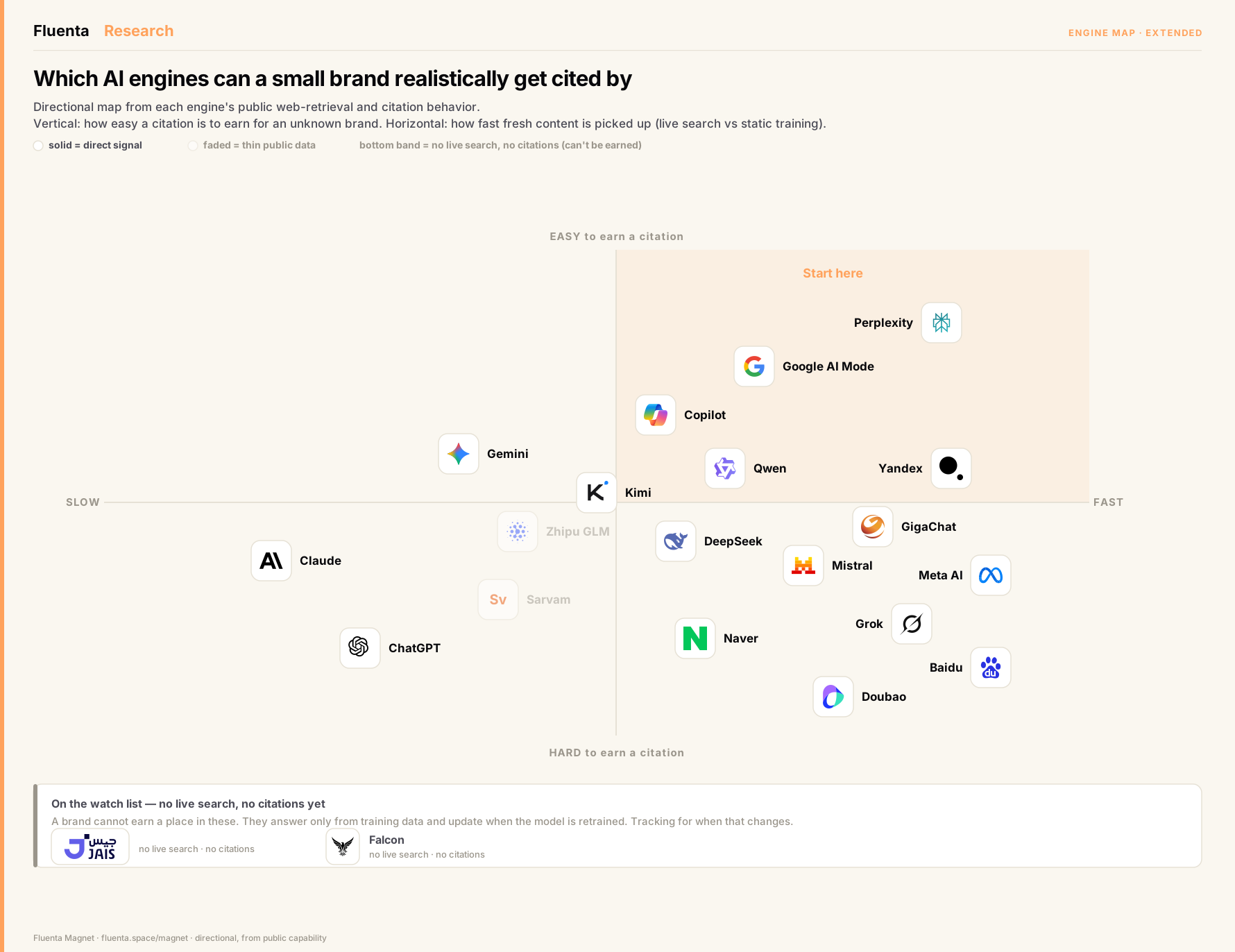
Some open the door, most do not. Not every engine behaves the same, and that decides where the first wins come from. Perplexity and Google AI Mode are the most willing to cite a brand without a large reputation behind it, with Copilot and Yandex close behind. ChatGPT, Claude, Grok and Gemini rarely name a small business. Walled or language-locked engines like Baidu, Doubao and Naver are the hardest of all, because a brand effectively has to live inside their ecosystem to be cited. Treating "AI" as one target wastes effort. The beachhead is the handful of engines that already open.
The map below places more than twenty global and regional answer engines by how easy a citation is to earn for an unknown brand and how fast each picks up fresh content.
How to get recommended by AI: the playbook
The audits point to the same sequence, ordered by leverage. It is a routine, not a project.
1. Clean the backlinks, weekly. Upload the disavow file, then review new referring domains every week and disavow the spam. Assume the profile is dirty, because effectively every audited one was.
2. Own the searches you already have demand for. Publish clear, sourced pages that answer the high-volume, low-difficulty questions the audit surfaced. That demand is already there and largely uncontested.
3. Get named in third-party lists and roundups. AI weighs consensus. One mention on an independent "best X" list moves recommendation more than another page on the owned domain.
4. Structure every page for extraction. Put the direct answer in the first two sentences under a plain heading. Buried answers do not get quoted, and this report is written the same way on purpose.
5. Start with Perplexity and Google AI Mode. Win the doors that open before spending effort on the engines that stay shut.
Get your baseline before you start fixing
Free. No subscription, no card. 24 hour turnaround, checked by a human analyst.
Why this window matters now
The terms that win this category are near-zero difficulty because almost nobody has claimed them yet. "How to rank in ChatGPT" carries a keyword difficulty of 3. "AI visibility audit" carries a difficulty of 0 with a 12 dollar cost per click, which is what a term looks like when buyers want it and there is no competition. AI defaults harden over time. The business an assistant cites this quarter becomes the answer a competitor has to dislodge next year, when it is harder and more expensive. The cost of waiting is not a lost ranking. It is becoming the brand the model has already learned to leave out.
Methodology
The findings cover the first 100 AI visibility audits run by Fluenta Magnet. Each audit tests 14 crawlers for site access, queries six live AI answer engines for brand recognition and category recommendation, benchmarks Domain Rating, organic traffic and referring domains against real competitors, extracts customer segments and pain signals, surfaces category content opportunities with search volume and difficulty, and produces a disavow file of spam domains. Businesses span industries from crypto to dentistry to local trades, across more than a dozen countries. These businesses chose to check their own AI visibility, so the sample is self-selected. Even among that motivated group, 89% were recommended by none of the engines queried.
See your own score
The number that changes a founder's mind is the one for their own site. A free AI visibility audit runs all of the above and returns the report, the content opportunities and the disavow file. No signup, results in minutes.
Get your AI visibility score
Free. No subscription, no card. 24 hour turnaround, checked by a human analyst.
Related reading: SEO is not dead, it moved into AI answers and where website traffic actually comes from now.
FAQ
Why doesn't ChatGPT recommend my business?+
Usually because the site is not a source ChatGPT can cite, not because the site is broken. Across 100 audits, engines recognized the brand about half the time but recommended it almost never. The fix is to become a citable, third-party-referenced source in the category, not to rebuild the website.
What is a good AI visibility score?+
In this sample the average was 22.6 out of 100 and only 8% of sites cleared 50. Anything above 50 already puts a business ahead of most of its market today.
Which AI engine should I optimize for first?+
Perplexity and Google AI Mode, because they are the most willing to cite brands without a large reputation. ChatGPT, Claude, Grok and Gemini rarely name small businesses yet.
Do spam backlinks really matter for AI?+
Yes. AI engines lean on trust signals, and every audited site carried spam links, often two thirds of the profile. Reviewing and disavowing junk links weekly is the cheapest trust improvement available.
How long does it take to get recommended by AI?+
It is content and authority work, so weeks to months, not days. Anyone promising AI recommendations in two weeks is selling something.
Cite this article
Researchers and journalists: this article is freely citable. Click to copy the academic-format reference for your bibliography or footnote.
Ivanov, O. (2026). AI Visibility Audit: 100 Sites, 89% Invisible to AI. Fluenta. Retrieved from https://fluenta.space/resources/reports/ai-visibility-audit.
About the author

Oleg Ivanov
Co-founder & CEO, Fluenta
Oleg is co-founder and CEO of Fluenta. He spent the last decade shipping products across fintech, commerce, and AI tooling, and now leads Fluenta's work scoring startup ideas against 25 live market and social data feeds.
Related Resources
SEO in 2026
Is SEO Dead? What Changed in 2026, and What Works
797,444 impressions, 7 clicks. The hard 2026 data on what died in SEO, what still works, and how to get cited by ChatGPT and AI Overviews.
Website Traffic 2026
How to Increase Website Traffic When Google Sends Less
Your rankings held but traffic fell. The 2026 data on why, plus a barbell playbook to diversify off Google and get found inside AI assistants.
AI VISIBILITY AUDIT
AI Visibility Checker: Is ChatGPT Recommending You? (2026)
AI visibility is whether ChatGPT, Perplexity, and Google AI name your brand. How to audit it, why 89% of brands are absent, and what makes AI recommend you.
See if AI recommends your business, or a competitor
Run the same audit on your own site: six AI answer engines, 14 crawlers, your winnable content opportunities, and a ready disavow file. Free, no signup, results in minutes.
Was this helpful?